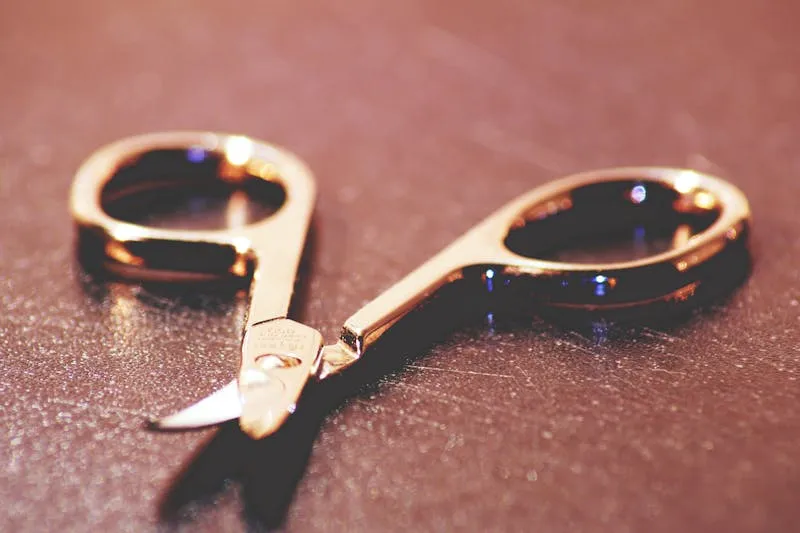
Shozaburo Forged Steel Scissors
Hand-forged in Osaka since the 1800s, these scissors deliver a cutting experience in another class entirely. Razor-sharp high-carbon steel blades glide through paper, fabric, and mixed media with effortless precision.
Check Price on Amazon → Free US shipping on eligible orders *Price approximate at time of writing. Check retailer for current price.Japanese scissors are in a league of their own. Living in Japan, we’ve watched master craftspeople forge blades by hand using techniques passed down for generations — the same steel-working traditions that produced katana swords now produce some of the sharpest, most precise scissors in the world. Whether you’re cutting delicate chiyogami paper, slicing through layers of silk, or trimming intricate scrapbook elements, a great pair of Japanese scissors transforms the experience.
The difference between a mediocre pair of scissors and a quality Japanese pair is something you feel immediately. The blades glide through material rather than chewing through it. The pivot is smooth and tight, giving you precise control over every cut. And because Japanese manufacturers use harder steel alloys with finer edge geometry, these scissors stay sharp far longer than their Western counterparts.
We’ve tested over twenty pairs of Japanese scissors across paper crafts, fabric cutting, general crafting, and detail work. Here are the best Japanese scissors you can buy right now, organized by use case.
Our Top Picks:
- Best Overall Craft Scissors: Shozaburo Forged Steel Scissors
- Best for Fabric/Sewing: Kai 7250 Professional Shears 10”
- Best for Paper Crafts: Olfa Craft Scissors SC (Serrated)
- Best Detail/Embroidery: Kai 5130 5” Embroidery Scissors
- Best Rotary Cutter: Olfa 45mm Rotary Cutter
- Best Budget Pick: Hasami Stainless Craft Scissors
- Best Ambidextrous: Kai 5135 5.5” Needle Craft Scissors
What Makes Japanese Scissors Different
Japanese scissors benefit from centuries of metallurgical expertise. Most quality Japanese scissors use high-carbon steel or stainless steel alloys that are hardened to a higher Rockwell rating than typical Western scissors. This means the blades hold a sharper edge longer, though they may require professional sharpening when they eventually dull.
The forging process matters too. Premium Japanese scissors like Shozaburo are hand-forged (tanzo) rather than stamped from sheet metal. Forging aligns the steel’s grain structure, resulting in a stronger, more uniform blade that cuts more precisely. You can feel the difference in the smooth, almost effortless cutting action.
Japanese scissors also tend to have tighter pivot points and finer blade geometry. The blades meet at a precise angle that creates a clean shearing action rather than the crushing motion of cheaper scissors. This is especially important for fabric cutting, where a crushed edge can fray and unravel.
1. Shozaburo Forged Steel Scissors — Best Overall Craft Scissors
Approx. ~$45 | Rating: 4.8/5 | Best For: All-around crafting with exceptional cutting quality
Shozaburo has been forging scissors in Osaka since the 1800s. Their hand-forged craft scissors are a masterclass in Japanese blade craftsmanship — the kind of tool that makes you realize what you’ve been missing with generic scissors.
The blades are made from high-carbon steel, hand-forged and ground to a razor-sharp edge. The cutting action is remarkably smooth. Paper, cardstock, felt, thin fabric, ribbon, twine — everything falls away cleanly with minimal effort. The hasami (scissors) feel balanced in the hand, with the traditional Japanese asymmetric handle design that distributes cutting force evenly.
These scissors are not stainless, which means they require a bit of care. Wipe the blades after use, keep them dry, and apply a light coat of camellia oil (tsubaki abura) occasionally. With proper care, a pair of Shozaburo scissors will outlast you.
Key Features
- Hand-forged high-carbon steel blades
- Razor-sharp edge with excellent retention
- Traditional Japanese handle design
- Smooth, precise cutting action
- Suitable for paper, fabric, and mixed media
- Requires occasional oiling (not stainless)
Why They’re Our Top Pick
The Shozaburo scissors represent the pinnacle of Japanese scissor craftsmanship at a price that’s accessible to serious crafters. The cutting quality is simply in another class — once you’ve used hand-forged scissors, stamped stainless models feel crude by comparison. We reach for these every day in our craft studio.
2. Kai 7250 Professional Shears 10” — Best for Fabric and Sewing
Approx. ~$55 | Rating: 4.7/5 | Best For: Cutting fabric with precision and comfort
Kai is the dominant name in Japanese sewing scissors, and the 7250 is their professional-grade workhorse. These 10-inch shears are the scissors you’ll find in tailoring shops and fashion studios across Japan. The long blades make clean, straight cuts through multiple layers of fabric, and the ergonomic handle reduces fatigue during extended cutting sessions.
The blade steel is a proprietary Kai alloy that balances sharpness, edge retention, and corrosion resistance. The edge is ground at an acute angle that slices through fabric fibers cleanly — no fraying, no pulling, no chewing. Whether you’re cutting silk, cotton, denim, or synthetic blends, these shears handle it all.
The handle design is where Kai really shines. The soft Santoprene inserts cushion your fingers and absorb vibration. The handle is canted at an angle that keeps the blade flat against the cutting surface, which is essential for accurate fabric cutting. After cutting fabric for hours, our hands still felt fresh.
Key Features
- 10-inch professional-length blades
- Proprietary high-carbon stainless steel
- Ergonomic handle with Santoprene inserts
- Razor-sharp edge for clean fabric cuts
- Right-handed design (left-handed version available)
- Lifetime Kai sharpening service available
A Sewing Room Essential
If you sew — whether garments, quilts, bags, or home decor — the Kai 7250 is the most important tool upgrade you can make. Good shears make pattern cutting faster, more accurate, and less fatiguing. We keep a pair exclusively for fabric (never use fabric shears on paper!) and they’ve maintained their edge through years of regular use.
3. Olfa Craft Scissors SC (Serrated) — Best for Paper Crafts
Approx. ~$18 | Rating: 4.5/5 | Best For: Clean paper cutting with anti-slip serrated blades
Olfa is best known for inventing the snap-off utility knife, but their craft scissors deserve equal recognition. The SC model features micro-serrated blades that grip paper and cardstock during cutting, preventing the material from sliding forward as you close the blades. For paper crafters, this is a game-changer.
The serration is extremely fine — it doesn’t leave a jagged edge like you might expect. Instead, it creates just enough friction to hold the material in place while the sharp edge does the cutting. The result is clean, precise cuts on everything from standard origami paper to heavy cardstock. This is particularly useful for cutting curves and intricate shapes where standard smooth-blade scissors can push the paper sideways.
The stainless steel blades resist adhesive buildup, which matters enormously for paper crafters who frequently cut tape, stickers, and glued layers. A quick wipe with rubbing alcohol keeps the blades cutting cleanly.
Key Features
- Micro-serrated blades prevent paper slipping
- Stainless steel resists adhesive buildup
- Clean cuts on paper, cardstock, and thin board
- Comfortable resin handles
- 6.5-inch length for detailed work
- Fluorine-coated to reduce sticking
Perfect Partner for Paper Crafts
We use these for everything in our paper crafting: cutting washi tape strips, trimming cardstock for card-making, cutting intricate shapes for scrapbooking, and trimming photographs. The serrated blades make a noticeable difference when cutting curves and small shapes — the paper stays put instead of sliding around. For more paper craft inspiration, browse our Japanese paper crafts guide. If you need a reliable adhesive to go with your cuts, our best Japanese glue guide covers Tombow, Kokuyo, and other top options.
4. Kai 5130 5” Embroidery Scissors — Best for Detail Work
Approx. ~$15 | Rating: 4.6/5 | Best For: Precision trimming, embroidery, and intricate cutting
Every crafter needs a pair of small, sharp scissors for detail work, and the Kai 5130 is the gold standard. These compact 5-inch scissors have fine, pointed blades that reach into tight spaces and trim with surgical precision. The tips meet perfectly, allowing you to snip individual threads, trim tiny paper elements, and cut intricate shapes with confidence.
Despite their small size, the Kai 5130 feels substantial in the hand. The blades are made from the same quality stainless steel as Kai’s larger shears, and the cutting action is equally smooth. The pointed tips are sharp enough to pierce fabric for starting cuts without a separate seam ripper.
Key Features
- 5-inch compact design for detail work
- Ultra-fine pointed tips for precision
- High-quality stainless steel blades
- Smooth pivot for controlled cutting
- Lightweight and comfortable for extended use
- Ideal for embroidery, cross-stitch, and detail trimming
5. Olfa 45mm Rotary Cutter — Best Rotary Cutter
Approx. ~$22 | Rating: 4.7/5 | Best For: Straight cuts through fabric, paper, and multiple layers
For quilters, sewists, and paper crafters who need long, straight cuts, nothing beats a rotary cutter. And nobody makes rotary cutters like Olfa — the Japanese company that invented them. The 45mm model is the most versatile size, capable of cutting everything from single sheets of origami paper to six layers of quilting cotton.
The tungsten steel blade is incredibly sharp out of the box and maintains its edge through hundreds of cuts. When it eventually dulls, replacement blades are inexpensive and easy to swap. The blade guard snaps into position automatically when you release the handle, which is an essential safety feature given how sharp these blades are.
The ergonomic handle fits comfortably in either hand, and the blade housing rotates for both right-handed and left-handed use. Combined with a self-healing cutting mat (we recommend Olfa’s own mats) and a clear acrylic ruler, this tool makes straight cuts faster and more accurate than any scissors.
Key Features
- 45mm tungsten steel circular blade
- Automatic blade guard for safety
- Ambidextrous handle design
- Compatible with standard 45mm replacement blades
- Cuts fabric, paper, felt, vinyl, and more
- Essential for quilting and precision cutting
6. Hasami Stainless Craft Scissors — Best Budget Pick
Approx. ~$12 | Rating: 4.3/5 | Best For: Everyday crafting without breaking the bank
Not every project requires hand-forged artisan scissors. Hasami’s stainless craft scissors deliver solid Japanese quality at a price point that won’t make you flinch when they encounter glue, glitter, or kids’ craft projects. The stainless blades are sharp, corrosion-resistant, and easy to maintain — a reliable daily-use option.
The blades have a fluorine coating that resists adhesive buildup, which is a feature typically found on scissors twice this price. The handles are comfortable for extended use, and the spring tension is well-calibrated for smooth cutting without hand fatigue.
Key Features
- Stainless steel with fluorine coating
- Resists adhesive and glue buildup
- Comfortable handles for extended use
- Affordable everyday option
- Great for mixed-media and messy projects
- Easy to clean and maintain
7. Kai 5135 5.5” Needle Craft Scissors — Best Ambidextrous
Approx. ~$14 | Rating: 4.4/5 | Best For: Left-handed crafters or anyone who switches hands
Finding quality left-handed scissors is a persistent frustration for left-handed crafters. The Kai 5135 solves this with a truly ambidextrous design that works equally well in either hand. The symmetric handles and balanced blade geometry provide the same clean, precise cuts regardless of which hand you use.
At 5.5 inches, these sit in the sweet spot between full-size scissors and detail scissors. They’re large enough for general cutting tasks but compact enough for detailed work. The stainless blades are sharp and durable, and the smooth pivot gives excellent control.
Key Features
- True ambidextrous design
- 5.5-inch versatile size
- Quality stainless steel blades
- Symmetric handles for either hand
- Smooth, controlled cutting action
- Great for needle crafts, paper, and general use
How We Tested
Cutting Performance
We cut identical materials with each pair of scissors: standard copy paper, heavy cardstock, cotton fabric, silk, felt, and ribbon. We evaluated clean-cut quality, effort required, and whether materials slipped or frayed during cutting.
Edge Retention
We performed 500 cuts on each pair and then re-evaluated cutting quality. We noted which scissors maintained their sharpness and which began to drag or tear material.
Comfort and Ergonomics
Each pair was used for a continuous 30-minute crafting session. We assessed handle comfort, hand fatigue, pivot smoothness, and overall balance.
Build Quality
We inspected blade alignment, pivot tightness, handle durability, and finish quality. We also assessed ease of maintenance — can the blades be cleaned easily? Are they prone to rust?
Value
We evaluated performance relative to price, replacement blade availability (for rotary cutters), and expected lifespan.
Japanese Scissors Care Guide
Daily Care
- Wipe blades clean after each use with a soft cloth
- Remove adhesive residue with rubbing alcohol
- Close scissors when not in use to protect the edge
Periodic Maintenance
- Apply a drop of camellia oil (tsubaki abura) to the pivot point monthly
- For carbon steel scissors, oil the blades lightly to prevent rust
- Store in a dry location away from humidity
- Use a leather or fabric sheath for storage
Sharpening
- Quality Japanese scissors should be professionally sharpened — never use powered grinders
- Kai offers a lifetime sharpening service for their shears
- For general craft scissors, a fine ceramic sharpening rod can touch up the edge
- Replace rotary cutter blades rather than attempting to sharpen them
Building a craft toolkit? See our best Japanese craft supplies roundup and Japanese glue guide for adhesive picks.
Frequently Asked Questions
What’s the difference between scissors and shears?
Scissors are typically under 6 inches with symmetric handles. Shears are longer (usually 8-12 inches) with asymmetric handles — a larger ring for multiple fingers and a smaller ring for the thumb. Shears are designed for long, smooth cuts through fabric, while scissors are better for general and detail work. In Japanese, both are called hasami, though shears may be specifically called tatchi basami (tailor’s shears).
Can I use fabric scissors to cut paper?
You can, but you shouldn’t. Paper contains microscite minerals and sizing chemicals that rapidly dull blade edges. A pair of sharp fabric shears can be ruined in a single afternoon of paper cutting. Keep separate scissors for paper and fabric — label them if necessary. This is the single most important rule of scissor care.
Are expensive Japanese scissors worth it over cheap ones?
For occasional use, affordable scissors work fine. But if you craft regularly, the difference is transformative. Quality Japanese scissors cut more cleanly, require less effort, stay sharp longer, and reduce hand fatigue. A $45 pair of Shozaburo scissors that lasts a decade and performs beautifully every day is a far better investment than replacing $8 scissors every year.
How do I choose between a rotary cutter and scissors?
Use a rotary cutter for long straight cuts, especially through multiple layers — quilting fabric, paper stacks, felt sheets. Use scissors for curves, detail work, and situations where you need to hold and manipulate the material while cutting. Most active crafters own both.
Should I buy left-handed scissors if I’m left-handed?
Yes, absolutely. Standard right-handed scissors push the blades apart when used in the left hand, causing material to fold between the blades rather than being cut cleanly. Left-handed scissors (or ambidextrous models like the Kai 5135) reverse the blade orientation so the cutting action works naturally in the left hand. It makes a significant difference.
Final Verdict
The best Japanese scissors combine centuries of blade-making expertise with modern ergonomics and materials science. Whether you need hand-forged craft scissors from Shozaburo, professional sewing shears from Kai, or an innovative rotary cutter from Olfa, Japanese manufacturers lead the world in cutting tool quality.
Our top overall recommendation is the Shozaburo Forged Steel Scissors for their unmatched cutting quality and longevity. For sewists, the Kai 7250 Professional Shears are an indispensable investment. And for paper crafters, the Olfa Craft Scissors SC with their serrated, non-slip blades solve a frustration you didn’t know had a solution.
Invest in quality scissors once, care for them properly, and they’ll serve you for decades. That’s the Japanese approach to tools — buy the best, maintain it well, and it becomes a lifelong companion. For a broader selection of cutting tools, adhesives, and organizers, see our best Japanese craft supplies guide. If you also work with kitchen shears, our dedicated Japanese kitchen shears guide covers the best options for food preparation.
Check Shozaburo Scissors on Amazon | Check Kai 7250 Shears on Amazon | Check Olfa Rotary Cutter on Amazon