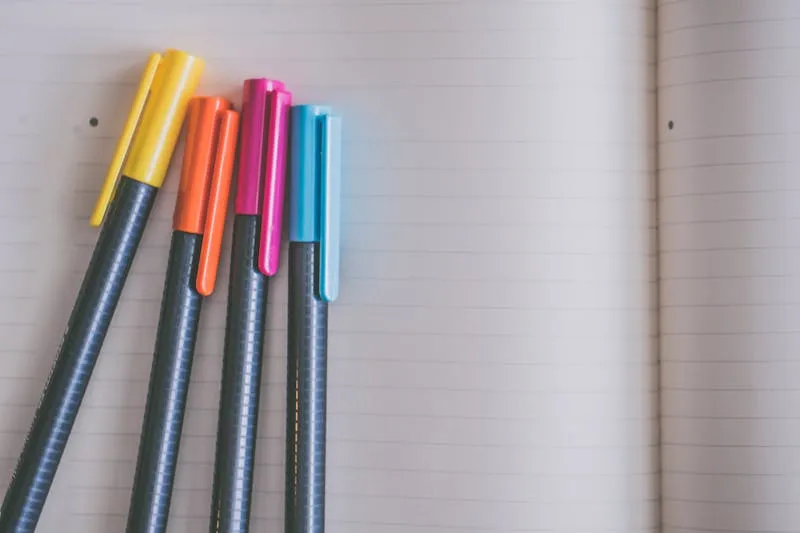
The best journaling pen is the one that makes you want to write. It should glide smoothly, produce clean lines, and feel natural in your hand for 15-30 minutes of continuous writing. Japanese pen manufacturers understand this better than anyone — their pens are designed for the daily writing habits of students and professionals who write extensively by hand.
We’ve journaled daily for years, testing dozens of pens across different papers — Kokuyo Campus, Midori MD, Tomoe River (in our Hobonichi planners), and Traveler’s Notebook refills. Here are the pens that consistently make journaling a pleasure.
Best Overall: Pilot Juice Up 0.5mm
Price: ~$3 | Type: Gel | Dry Time: 2-3 seconds
The Pilot Juice Up at 0.5mm is our go-to journaling pen. It’s smooth enough for extended writing without fatigue, fine enough for clean text in any notebook, and the ink quality is outstanding — vivid black with no skipping or blobbing.
The 0.5mm tip is the sweet spot for journaling: fine enough for legible text in margins and small notebooks, bold enough to produce satisfying, visible writing. The synergy-tip technology (a tiny ball recessed in a needle-like tip) provides smoothness that belies the fine tip size.
Available in 24 colors, so you can incorporate color-coding into your journal entries: black for main text, blue for reflections, red for important events.
Pros:
- Exceptionally smooth for a fine-tip gel pen
- Fast 2-3 second dry time
- Vibrant ink with excellent consistency
- 24 colors available
- Affordable at ~$3
Cons:
- Cap-type (no retractable option in this line)
- Grip section is narrow
- Ink runs out moderately fast with heavy journaling
Best for Speed: Uni Jetstream 0.5mm
Price: ~$3 | Type: Low-viscosity ballpoint | Dry Time: Under 1 second
If you write quickly and hate waiting for ink to dry, the Uni Jetstream is your pen. The low-viscosity Jetstream ink flows like gel but dries almost instantly — under one second on most papers. You can write at full speed, close your notebook, and never see a smear.
The writing experience is slightly different from gel pens — less “wet” and more “gliding.” Some journalers prefer this feel; others prefer the fuller ink deposit of gel pens. Try both and see which suits your writing style.
The Jetstream also excels on problematic papers. Where gel ink might feather or bleed on lower-quality paper, Jetstream ink maintains clean lines. If you journal on receipts, napkins, or anything other than premium notebook paper, the Jetstream handles it gracefully.
Pros:
- Fastest dry time (under 1 second)
- Works on any paper surface
- Smooth, controlled writing
- Retractable design (no cap to lose)
- Excellent for left-handed journalers
Cons:
- Lines are less dark than gel ink
- Writing feel is less “wet” (preference-dependent)
- Fewer color options than gel pens
Best for Left-Handed Writers: Pentel EnerGel 0.5mm
Price: ~$3 | Type: Gel | Dry Time: 1-2 seconds
Left-handed journalers know the struggle: your hand drags through wet ink, smearing entries and staining your palm. The Pentel EnerGel solves this with the fastest gel ink dry time available — 1-2 seconds. Combined with its smooth writing and vivid ink, the EnerGel is the best gel pen for southpaw journalers.
The needle-point tip produces clean lines without skipping. The retractable clip design is convenient for one-hand operation. Available in black, blue, and red, with limited additional colors.
Pros:
- Fastest-drying gel ink (1-2 seconds)
- Best gel pen for left-handed writers
- Smooth, consistent writing
- Retractable design
- Strong clip for notebook attachment
Cons:
- Fewer color options than Pilot Juice Up
- Grip can feel slippery for some hands
- Slightly bolder lines than equivalent-size Pilot pens
Best Fountain Pen: Pilot Kakuno (Fine)
Price: ~$12 | Type: Fountain pen | Nib: Fine (Japanese Fine ≈ Western Extra-Fine)
Fountain pens transform journaling into a ritual. The tactile feedback of a nib on paper, the shading variations in the ink, the personal connection between hand pressure and line quality — these elements elevate journaling from recording information to practicing a craft.
The Pilot Kakuno is our recommended entry point. At $12, it’s affordable enough to try without commitment. The Japanese fine nib produces clean, thin lines appropriate for detailed journaling. The clear barrel shows the ink level, and the converter (sold separately, ~$5) lets you use bottled inks from Pilot Iroshizuku and other brands.
For fountain pen journaling, paper quality matters. Use Kokuyo Campus High-Grade, Midori MD, or Tomoe River paper for the best experience. Standard notebook paper may feather or bleed with fountain pen ink.
Pros:
- Exceptional value at $12
- Smooth Japanese fine nib
- Uses Pilot cartridges or converter for bottled ink
- Lightweight and comfortable for extended writing
- Smiling face on nib is charming
Cons:
- Requires fountain pen-friendly paper
- Cap-type (no retractable option)
- Not as convenient as a gel pen (cap, ink management)
- Learning curve for new fountain pen users
Best for Artistic Journals: Sakura Pigma Micron Set
Price: ~$12 (6-pen set) | Type: Felt-tip pigment | Sizes: 005, 01, 02, 03, 05, 08
For journals that combine writing with illustration, the Sakura Pigma Micron set provides multiple line widths for different purposes. The archival pigment ink is waterproof and lightfast — your entries won’t fade over decades.
Use the 005 (0.2mm) for tiny margin notes, the 03 (0.35mm) for standard text, and the 05 (0.45mm) or 08 (0.5mm) for headers and emphasis. The consistency across the set means your journal has visual hierarchy without needing multiple pen types.
Pros:
- Multiple sizes in one set
- Archival, waterproof, lightfast ink
- Won’t smear under highlighters or washi tape
- Consistent line quality
- Industry standard for illustration
Cons:
- Felt tips wear with heavy use
- Less smooth than gel pens for extended writing
- Not refillable (disposable)
- Only available in limited colors (black, sepia, and a few others)
Best Erasable: Pilot FriXion Clicker 0.5mm
Price: ~$3 | Type: Erasable gel | Dry Time: 3-4 seconds
For journalers who want the ability to correct mistakes, the Pilot FriXion Clicker lets you erase and rewrite cleanly. This is particularly useful for planner-journal hybrids where schedules change and corrections are frequent.
The trade-off: FriXion ink is lighter than permanent gel ink, and it’s not archival (the thermochromic ink can become transparent in extreme heat). For casual journals and planners, these trade-offs are acceptable. For heirloom journals you want to preserve for decades, use permanent ink.
Pros:
- Fully erasable
- Retractable (Clicker version)
- Multiple color options
- Good for planner-journal hybrids
- Clean erasure on quality paper
Cons:
- Ink is lighter than permanent gel pens
- Not archival (heat-sensitive)
- 3-4 second dry time
- Eraser leaves slight residue over time
Matching Pens to Paper
| Paper Type | Best Pen | Why |
|---|---|---|
| Kokuyo Campus | Any pen on this list | Campus paper handles everything well |
| Midori MD | Fountain pen, Pilot Juice Up | Cream paper shows ink shading beautifully |
| Tomoe River (Hobonichi) | Fine tip gel (0.4-0.5mm), fine fountain pen | Thin paper; fine tips minimize show-through |
| Kraft paper (TN) | Uni Jetstream, Pentel EnerGel | Absorbent surface; low-viscosity ink works best |
| Standard printer paper | Uni Jetstream | Handles any paper quality gracefully |
For pen-paper pairing details, see our best pens for Hobonichi guide.
Frequently Asked Questions
What tip size is best for journaling?
0.5mm is the most versatile journaling tip size — fine enough for legible text in small spaces, bold enough for satisfying, visible writing. If your handwriting is naturally small, try 0.38mm. If you write large or want bold entries, try 0.7mm.
Should I journal with a gel pen or ballpoint?
Gel pens provide smoother writing and more vivid ink — ideal for dedicated journal notebooks with quality paper. Ballpoint (or low-viscosity ballpoint like Jetstream) provides faster drying and works on any paper — ideal for versatility and left-handed writers. Try both and follow your preference.
How do I prevent ink bleeding through journal pages?
Use quality paper (Kokuyo Campus, Midori MD) and fine-tip pens (0.3-0.5mm). Avoid pressing too hard — light pressure deposits less ink and reduces bleeding risk. If bleeding persists, switch to Uni Jetstream ink, which has the lowest bleeding rate of any Japanese pen ink.
Is fountain pen journaling worth the effort?
If you enjoy the process of writing and want journaling to feel special, yes. The tactile feedback, ink shading, and personal connection of a fountain pen elevate daily journaling from a task to a ritual. If you want maximum convenience, stick with gel pens. See our best Japanese fountain pens under $50 for affordable entry options.
How many pens do I need for journaling?
One. A single black gel pen is all you need to maintain a meaningful journal. Additional pens (colors, different types) enhance the experience but are not requirements. Start with one pen you love and add others only when you feel a specific need.