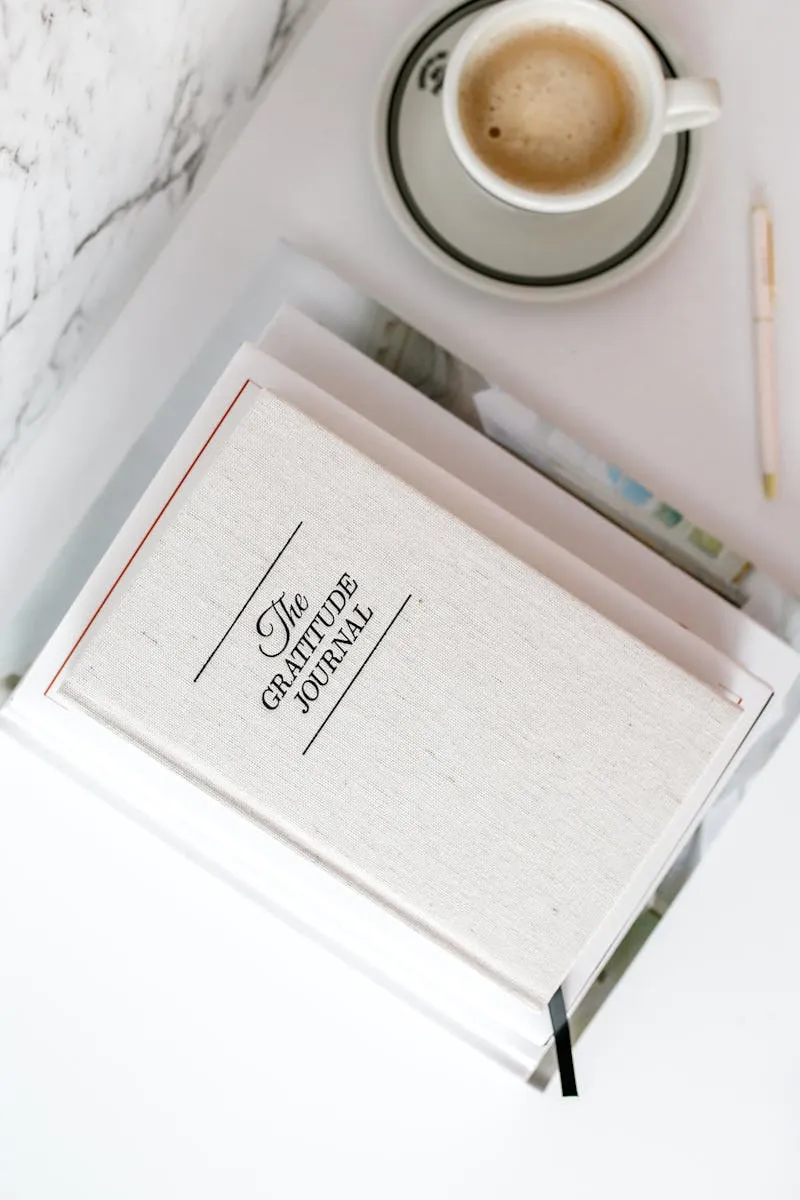
Gratitude journaling is one of the most evidence-backed wellness practices available. Research from positive psychology consistently shows that people who regularly write down things they’re grateful for report higher happiness, better sleep, and reduced stress. The practice is simple — write a few things you’re grateful for each day — but sustaining it requires making the ritual enjoyable.
That’s where Japanese stationery comes in. When your gratitude journal has beautiful paper, a satisfying pen, and a pleasing aesthetic, you look forward to the daily practice instead of treating it as homework. Living in Japan, we’ve seen firsthand how the Japanese concept of teinei na kurashi (丁寧な暮らし, living with care and attention) aligns perfectly with gratitude journaling — both emphasize finding meaning in small, everyday moments.
Choosing Your Gratitude Journal Notebook
Best Dedicated Option: Midori MD Notebook A6 (Blank)
Price: ~$10 | Pages: 176 | Size: A6 (pocket-size)
The Midori MD Notebook in A6 blank is our top recommendation for a dedicated gratitude journal. The pocket size (4.1 x 5.8 inches) keeps it bedside-table-friendly or in your bag for end-of-day entries. The 176 blank pages give you complete freedom — no pre-printed prompts constraining your expression.
The cream-colored paper feels warm and inviting, which subtly encourages positive reflection. Writing on MD paper with a quality pen transforms a routine practice into a small luxury.
Best Budget Option: Kokuyo Campus Notebook A5 (Dotted)
Price: ~$4 | Pages: 80 | Size: A5
The Kokuyo Campus in A5 dotted provides more space per entry at a lower price. The dotted ruling helps keep entries aligned without the visual rigidity of solid lines. At $4, you can start without any financial commitment — if the practice doesn’t stick, you’ve invested very little.
Best for Daily Prompts: Hobonichi Techo Original
Price: ~$30 | Pages: 365+ (one per day)
The Hobonichi Techo provides one page per day with a daily Japanese quote. This structure naturally assigns a single page to each day’s gratitude entry, and the daily quote can serve as a jumping-off point for reflection. The premium Tomoe River paper handles any pen beautifully.
The Hobonichi is the premium choice — ideal for people who want their gratitude journal to feel like a meaningful daily ritual.
Choosing Your Pen
Your gratitude journal pen should feel special — slightly elevated from your everyday writing pen. This distinction signals to your brain that you’re entering a reflective practice, not just taking notes.
Our Top Pick: Pilot Juice Up 0.5mm (Blue-Black)
Price: ~$3
Blue-black ink on cream paper (Midori MD) creates a warm, inviting aesthetic. The color is rich enough to be satisfying but soft enough to feel reflective rather than clinical. The Pilot Juice Up writes smoothly, dries quickly, and produces consistent, elegant lines.
For Fountain Pen Users: Pilot Kakuno (Fine) with Iroshizuku Ink
Price: ~$12 (pen) + ~$20 (50ml ink bottle)
A fountain pen elevates gratitude journaling into genuine ritual. The Pilot Kakuno with Pilot Iroshizuku ink (we recommend tsuki-yo, a warm blue-gray) produces beautiful, shaded writing that makes every entry feel artisanal.
For Simplicity: Uni Jetstream 0.5mm
Price: ~$3
The Uni Jetstream is the “just write” option. It works on any paper, dries instantly, and never skips. If you want zero friction between the impulse to journal and the act of writing, the Jetstream is the pen.
For a full guide to journaling pens, see our best journaling pens article.
Setting Up Your Gratitude Journal
The Simple Format (2 minutes per day)
Write the date and list 3 things you’re grateful for. That’s it.
May 15, 2025

1. Morning coffee was perfect today
2. The neighbor's garden is blooming — walked past it and smiled
3. Got a text from an old friend
This format is sustainable because it’s fast. Two minutes before bed is all it takes. The constraint of exactly three items forces you to choose, which deepens the reflection.
The Expanded Format (5-10 minutes per day)
Date the entry, list 3 grateful moments, then write 2-3 sentences about why one of them matters.
May 15, 2025

Grateful for:
1. Morning coffee was perfect today
2. The neighbor's garden is blooming
3. Got a text from an old friend

The text from [friend's name] reminded me that meaningful
connections persist even through long silences. We don't talk
often, but when we do, it's like no time has passed. That
kind of friendship is rare and worth protecting.
The “why it matters” paragraph is where the real psychological benefit happens. Identifying why something makes you grateful deepens the positive emotion and trains your brain to notice similar moments.
The Visual Format (10-15 minutes per day)
For creatively inclined journalers, add visual elements to your gratitude entries:
- A small sketch of the thing you’re grateful for
- Washi tape borders that reflect the day’s mood
- A sticker that symbolizes the entry’s theme
- Color-coded entries using Zebra Mildliner highlighters
This format takes longer but creates a journal that’s beautiful to revisit — a visual record of your positive moments over time.
Gratitude Prompts for When You’re Stuck
Some days, “what am I grateful for?” draws a blank. These prompts help:
Sensory prompts:
- What did you see today that was beautiful?
- What did you taste today that was satisfying?
- What sound brought you comfort or joy?
People prompts:
- Who made your day easier today?
- Who did you think about warmly?
- Who would you miss if they weren’t in your life?
Small moments prompts:
- What everyday convenience did you not have to think about?
- What worked properly that you usually take for granted?
- What small choice today made you happy?
Growth prompts:
- What did you learn today?
- What challenge are you grateful for in retrospect?
- What ability do you have that you once didn’t?
Building the Habit
Time and Place
Choose a consistent time and place for your gratitude practice:
- Morning: Sets a positive tone for the day. Write about yesterday’s highlights.
- Evening (our recommendation): Reflects on the full day. Write before bed for improved sleep quality.
- During commute: If you ride (not drive), use transit time for a portable gratitude journal.
Keep your journal and pen in the same place — bedside table, kitchen counter, or bag. Removing the “where is my journal?” friction makes the habit stickier.
Start Small
Begin with 3 items per day, no expanded writing. Do this for 2 weeks. If it feels sustainable, add the “why it matters” paragraph. If 3 items feels like too much, start with 1. One genuine gratitude observation per day is infinitely more valuable than an ambitious format you abandon after a week.
Track Streaks
Use a simple habit tracker in your planner or journal — a row of boxes, one per day, that you check off after each gratitude entry. Visible streaks are motivating. Missing a day is fine — don’t let a broken streak end the practice.
Monthly Review
At the end of each month, flip through the month’s entries and note patterns. What themes appear repeatedly? What categories of gratitude show up most? This meta-review deepens self-awareness and often reveals sources of happiness you hadn’t consciously recognized.
Enhancing Your Practice with Japanese Concepts
Wabi-Sabi (侘び寂び) — Finding Beauty in Imperfection
Let your gratitude journal be imperfect. Messy handwriting, crossed-out words, uneven entries — these imperfections make the journal authentic. Don’t aim for Instagram-worthy pages. Aim for honest reflection.
Ichigo Ichie (一期一会) — Once in a Lifetime
The Japanese tea ceremony concept of “this moment will never occur again” enriches gratitude practice. Each day’s grateful moments are unrepeatable. Recording them preserves what would otherwise be lost to the flow of time.
Mono no Aware (物の哀れ) — Pathos of Things
An awareness of impermanence that deepens appreciation. Gratitude for cherry blossoms is richer when you know they bloom for only two weeks. Gratitude for a friend’s presence is richer when you understand that all relationships are temporary.
Frequently Asked Questions
How long should I write each day?
Start with 2 minutes (3 bullet points). Expand to 5-10 minutes (3 points + paragraph) when the habit is established. Never force yourself to write longer than feels natural. Brevity and consistency beat length and sporadic entries.
What if I can’t think of anything I’m grateful for?
You’re not looking small enough. Can you see? That’s something. Did you eat today? That’s something. Do you have a roof? That’s something. Gratitude doesn’t require grand moments — the practice is about noticing the ordinary goodness that’s always present but usually invisible.
Should I use a dedicated journal or my daily planner?
A dedicated journal keeps gratitude entries together for easy review and creates a ritual separation from task-oriented planning. However, integrating gratitude into your daily planner (a small section at the bottom of each day) works fine and is more sustainable for some people.
How long does it take to see benefits?
Research suggests that 2-3 weeks of consistent daily gratitude journaling produces measurable improvements in reported happiness and well-being. Most practitioners notice a subtle shift in perspective within the first week — a tendency to notice positive moments as they happen.
Can I do gratitude journaling digitally?
You can, but paper-based journaling offers additional benefits: the motor engagement of handwriting strengthens the memory of grateful moments, and the physical journal becomes a tangible artifact of positivity that you can revisit. We strongly recommend pen and paper for this practice.