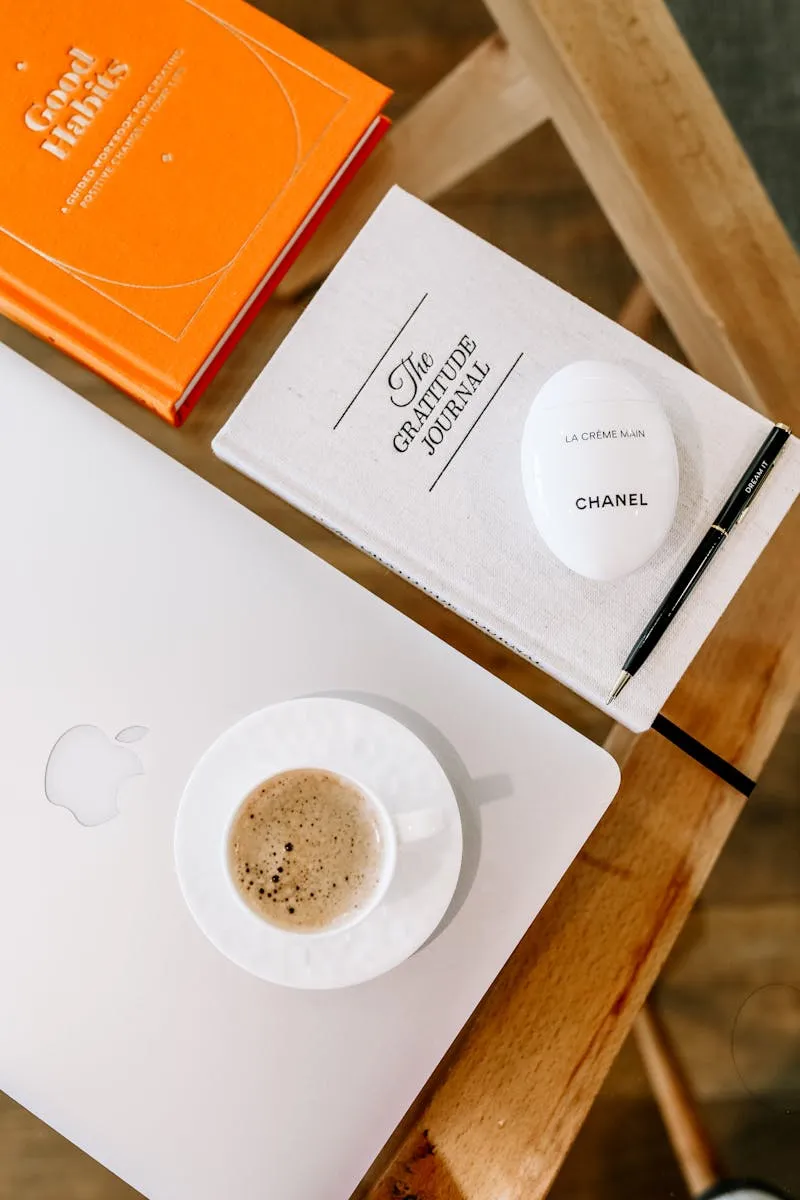
You want to start journaling. Maybe you have seen beautiful journal spreads on social media and felt inspired. Maybe you want a creative outlet, a planning system, or simply a place to collect your thoughts. Whatever your reason, you are in the right place.
Starting a journal can feel overwhelming. There are so many notebooks, pens, tapes, stickers, and accessories to choose from that the decision paralysis alone can prevent people from ever beginning. We have seen it happen — people spend weeks researching the “perfect” setup, buying supplies they do not need, and then feeling intimidated by their blank first page.
We want to help you avoid that. This guide strips journaling down to its essentials, walks you through building a setup that actually works, and gives you the confidence to open your notebook and start writing. No perfection required. No artistic talent necessary. Just you, a notebook, and a pen.
The Only Two Things You Actually Need
Let us start with a truth that the stationery industry does not always emphasize: you need exactly two things to start journaling.
1. A notebook. Any notebook. A cheap composition book from a dollar store works. A fancy Leuchtturm1917 works. A stack of printer paper stapled together works. The “best” notebook is the one you have right now.
2. A pen. Any pen. The ballpoint you found in a desk drawer works. A gel pen works. A fountain pen works. A pencil works. The “best” pen is the one that makes you want to write.
That is it. Everything else — washi tape, stickers, highlighters, rulers, stamps, brush pens — is optional decoration. Wonderful, enjoyable decoration that we personally love, but optional nonetheless. Do not let the pursuit of the perfect setup prevent you from starting.
With that said, if you want specific recommendations for a setup that balances quality, functionality, and budget, read on.
Choosing Your First Journal Notebook
Your notebook is your foundation. Here is how to choose one that suits your journaling style.
Notebook Types
Lined notebooks have horizontal lines that guide your writing and keep text neat. Best for: writing-focused journals, diary entries, and long-form reflection.
Dotted notebooks have a grid of dots instead of lines. The dots provide subtle guidance for writing while allowing freedom for drawing, sketching, and layout design. Best for: bullet journaling, mixed-media journals, and anyone who wants structure with flexibility.
Grid notebooks have square grid lines. Best for: technical planning, graph-based layouts, and journalers who like precise structure.
Blank notebooks have no printed guides. Best for: artists, free-form journalers, and those who find lines or dots constraining.
Our Recommended Starter Notebooks
Budget pick: Kokuyo Campus (dotted) — $5-8. The Kokuyo Campus is Japan’s most popular notebook for good reason. The paper is smooth, ink-friendly, and affordable. The dotted version provides perfect guidance for journaling. This is our top recommendation for beginners because it removes the pressure of using an expensive notebook.
Mid-range pick: Midori MD Notebook — $10-15. The Midori MD uses a cream-colored paper that feels luxurious and handles all pen types beautifully. The lay-flat binding makes writing comfortable, and the simple design is elegant without being fussy.
Premium pick: Hobonichi Techo — $22-30. If you want a daily planner-journal hybrid with the finest paper available, the Hobonichi Techo is the gold standard. The Tomoe River paper is legendary, and the one-page-per-day format provides structure and space.
Alternative: Traveler’s Notebook — $30-40. If you want a modular system where you can add, remove, and rearrange notebook inserts, the Traveler’s Notebook is a beautiful and flexible option.
Choosing Your First Journal Pens
Your pen should feel comfortable in your hand and produce lines that you enjoy looking at. Here are our recommendations across price points.
For Writing-Focused Journaling
Uni Jetstream 0.5mm — $3. A smooth ballpoint that dries almost instantly and writes comfortably for hours. Zero smearing, zero fuss. Our go-to recommendation for journaling beginners. Read our Jetstream review.
Pilot G2 0.7mm — $8 (12-pack). A classic gel pen with smooth ink flow and comfortable grip. Available in many colors for color-coding. Read our Pilot G2 review.
For Decorative Journaling
Zebra Mildliner — $22 (25-pack). Pastel highlighters perfect for headers, borders, and color-coding. The dual tips (broad and fine) provide versatility. Read our Mildliner review.
Sakura Pigma Micron — $10 (6-pack). Archival-quality fine-tip pens ideal for drawing, doodling, and detailed lettering. Waterproof ink that does not bleed or feather. Read our Micron review.
For Fountain Pen Journaling
Platinum Preppy — $5. The best budget fountain pen, period. Writes beautifully, costs less than most gel pens, and introduces you to the pleasure of fountain pen writing. Read our Preppy review.
Building Your Starter Kit
Here is our recommended starter kit at three budget levels:
Budget Starter Kit (~$15)
- Kokuyo Campus notebook (dotted) — $5
- Uni Jetstream 0.5mm (3-pack) — $6
- Tombow Mono eraser — $2
- One roll of MT washi tape — $4
Mid-Range Starter Kit (~$40)
- Midori MD Notebook (A5 dotted) — $12
- Pilot G2 (5-pack, assorted colors) — $8
- Zebra Mildliner (5-pack) — $8
- Sakura Pigma Micron (3-pack) — $6
- Tombow Mono eraser — $2
- Two rolls of washi tape — $8
Premium Starter Kit (~$80)
- Hobonichi Techo — $28
- Uni Jetstream 0.5mm — $3
- Pilot Hi-Tec-C (3-pack) — $9
- Zebra Mildliner (10-pack) — $14
- Sakura Pigma Micron (6-pack) — $10
- Tombow Dual Brush Pen (6-pack) — $12
- Washi tape assortment — $8
You do not need the premium kit to journal well. The budget kit is entirely sufficient for excellent journaling. The additional items in the higher tiers add creative options, not necessity.
Check Midori MD Notebook on Amazon
Setting Up Your First Page
The blank first page of a new journal is intimidating. Here is a simple structure to get you started:
Title Page (Page 1)
Write the date you are starting your journal, your name (or a pen name), and anything else that feels right — a quote you love, a word for the year, or simply “Volume 1.” This does not need to be artistic. A simple title in your normal handwriting is perfect.
Index / Table of Contents (Pages 2-3)
If your notebook does not have numbered pages, number them as you go. Leave 2-3 pages at the front for an index where you can note important entries and their page numbers. This is optional but useful for finding specific entries later.
Your First Real Entry (Page 4)
Start writing. The format does not matter. Some options:
- Free write: Set a timer for 10 minutes and write whatever comes to mind.
- Daily log: Date, weather, three things you did, one thing you are grateful for.
- Prompt response: Answer a question like “What does my ideal day look like?” or “What am I most excited about right now?”
The only rule: do not erase or tear out your first entry. It does not need to be perfect. It just needs to exist.
Five Journaling Styles to Try
1. Daily Diary
Write about your day — what happened, how you felt, what you noticed. This is the most traditional form of journaling and the simplest to maintain. Aim for 5-15 minutes of writing per day. No format required.
2. Bullet Journaling
A rapid-logging system that uses bullets, symbols, and short phrases to track tasks, events, and notes. Invented by Ryder Carroll, bullet journaling combines planning and reflection in a single notebook. See our complete guide to starting a bullet journal.
3. Gratitude Journaling
Write three things you are grateful for each day. Simple, quick, and backed by research showing positive effects on mental health. Can be done in 2 minutes.
4. Art Journaling
Combine writing with drawing, painting, collage, and mixed media. Art journaling prioritizes visual expression and creative experimentation over written content. No artistic skill required — it is about process, not product.
5. Junk Journaling
Collect and paste ephemera — ticket stubs, receipts, photos, postcards, wrappers, stamps — into your journal alongside notes and reflections. Junk journaling creates a tactile, richly textured record of daily life.
Essential Techniques for Beginners
The Two-Minute Rule
On days when you do not feel like journaling, commit to just two minutes. Open your journal, write the date, and write one sentence. That is enough. Consistency matters more than volume, and a one-sentence entry is infinitely better than a skipped day. Many times, those two minutes turn into twenty — but even when they do not, you have maintained the habit.
Imperfection Is the Point
Your journal will contain misspelled words, crooked lines, smudged ink, and entries you wish you had written differently. This is normal and good. A journal is a living document, not a performance. The imperfections are what make it real and valuable. Resist the urge to tear out pages, and resist the urge to start over in a new notebook because the current one is not “perfect.”
Date Everything
Write the date on every entry, every page, every spread. Dates turn a journal from a collection of thoughts into a chronological record. Years from now, knowing when you wrote something adds context and meaning that the content alone cannot provide.
Write for Yourself
Your journal is private. Write honestly. Do not perform for an imaginary audience. The thoughts that are hardest to write down are often the most valuable to have written. If privacy is a concern, keep your journal in a secure location and let the people in your life know it is private.
Do Not Compare
Social media is full of stunning journal spreads with perfect calligraphy, elaborate illustrations, and coordinated color schemes. These represent hours of skilled work, often by professional artists and content creators. Your journal does not need to look like that. Your journal needs to look like yours — messy, honest, functional, and real.
Adding Decoration (When You Are Ready)
Once you are comfortable with the basics — writing regularly, finding your style, enjoying the process — you might want to add decorative elements. Here is a progression that builds skills gradually:
Level 1: Washi Tape
The easiest way to add visual interest. Tear off a strip, stick it down. No skill required, and it instantly makes a page look more intentional. Start with one or two rolls in colors you like. See our washi tape ideas article.
Level 2: Stickers
Pre-made stickers eliminate the need to draw or design. Use them to mark dates, label sections, or add decorative elements. Japanese stationery shops offer thousands of sticker sheets in every theme imaginable.
Level 3: Headers and Borders
Use a broad-tip marker or highlighter to create simple headers for your entries. Draw basic borders around sections. These simple touches add structure and visual hierarchy without requiring artistic skill.
Level 4: Doodling
Add small drawings to your entries — weather icons, mood indicators, simple illustrations of things you mention in your writing. Doodles do not need to be good. They add personality and visual variety.
Level 5: Lettering
Practice hand lettering for titles and headers. Start with basic block letters, then explore brush lettering with a Tombow Dual Brush Pen. Lettering is a skill that improves with practice and adds significant visual impact.
Common Beginner Mistakes (and How to Avoid Them)
Buying Too Many Supplies Before Starting
You need a notebook and a pen. Buy those two things and start journaling today. Add supplies as you discover what you actually want and need through use, not through anticipation.
Waiting for the “Right” Time to Start
There is no perfect time to start. January 1 is not better than June 14 or October 3. Start today, even if it is the middle of the week, the middle of the month, or the middle of the year. The best time to start was a year ago; the second best time is now.
Treating the Journal as Precious
If you are afraid to “ruin” your journal by writing something imperfect, you have made the journal too precious. A journal is a tool, not an artifact. Write in it. Make mistakes in it. Spill coffee on it. The wear and imperfection give it character and prove it was actually used.
Journaling for Social Media
If your primary motivation is creating content for Instagram or TikTok, your journal will become a performance rather than a practice. It is fine to share your journal if that brings you joy, but the journaling itself should be for you first.
Quitting After Missing a Day
You will miss days. You will miss weeks. This is normal and does not mean you have “failed.” When you realize you have not journaled recently, simply open your notebook and write today’s date. Start again. The habit is not broken by one gap — it is broken only when you decide it is.
Supplies We Recommend Adding Over Time
Once you have been journaling for a month or two and know what style suits you, consider adding these supplies:
Month 2-3: A second pen color (for headers or emphasis) and a basic set of washi tape (3-5 rolls).
Month 3-6: Highlighters (the Zebra Mildliner is perfect), a set of fine-tip pens for detail work, and stickers in a theme you enjoy.
Month 6+: Consider upgrading your notebook if you have outgrown your starter. Try a Midori MD or Hobonichi for a premium paper experience. Add brush pens if you are interested in lettering.
Check Journal Starter Supplies on Amazon
Frequently Asked Questions
How long should I journal each day?
There is no minimum. Two minutes is enough. Five to fifteen minutes is typical. Some people journal for an hour. The right amount is whatever feels sustainable and enjoyable for you. A consistent 5 minutes daily is more valuable than an occasional 60-minute session.
Should I journal in the morning or evening?
Both have benefits. Morning journaling helps clarify your intentions and priorities for the day. Evening journaling helps process events and emotions from the day. Some people do both. Experiment and find what works for your schedule and energy levels.
What should I write about?
Anything. Your day. Your feelings. Your plans. Your observations. A conversation you had. A book you are reading. A question you are thinking about. A list of things that made you smile. There is no wrong topic. If you are stuck, use a prompt — thousands of journaling prompts are available free online.
Is digital journaling as good as paper journaling?
Both are valid. Paper journaling offers tactile satisfaction, freedom from screens, and a physical artifact. Digital journaling offers searchability, backup, and multimedia integration. Many people use both. If you are reading this guide, you are probably interested in paper journaling, and we encourage you to try it — the physical experience of writing by hand engages your brain differently than typing.
How do I keep my journal private?
Keep it in a location others are unlikely to access — a locked drawer, a personal bag, a high shelf. Communicate to household members that your journal is private and not to be read. If you are concerned about specific entries, consider using a code, writing in a language others in your household do not read, or tearing out individual pages (though we generally discourage page removal).
What do I do when I finish a journal?
Date the last page, take a moment to appreciate what you have created, and store the finished journal in a safe place. Many people keep all their completed journals and revisit them periodically. Start a new notebook and continue. The transition between journals can feel like a fresh start — embrace it.
Final Thoughts
Journaling is one of the few activities that costs almost nothing, requires no special talent, and provides measurable benefits to mental clarity, emotional processing, and creative expression. The supplies are secondary to the practice. A two-dollar notebook and a borrowed pen are all you need to begin a habit that can last a lifetime.
Start today. Write the date. Write one sentence. That is your journal. Everything else — the beautiful spreads, the coordinated supplies, the elaborate systems — can come later, or never. The act of writing, in and of itself, is enough.
For more journaling inspiration, see our How to Start Bullet Journaling, Hobonichi Techo Review, and Traveler’s Notebook Setup Guide.