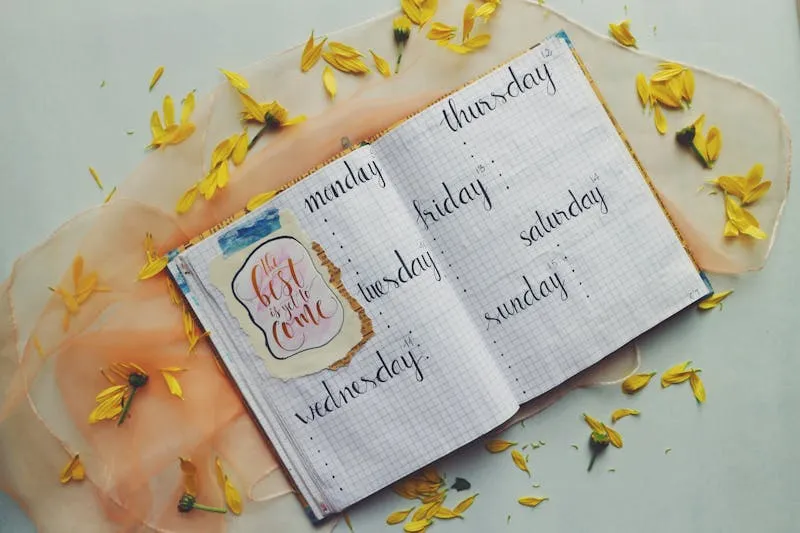
Choosing between the Hobonichi Weeks and the Hobonichi Original (Techo) is one of the most common decisions new Hobonichi users face. Both use the legendary Tomoe River paper, both are made in Japan with exceptional craftsmanship, and both have passionate fan communities. But they serve fundamentally different planning styles.
We’ve used both — the Hobonichi Techo Original for three years and the Hobonichi Weeks for two. Here’s an honest, detailed comparison to help you choose the right planner.
The Fundamental Difference
Hobonichi Original (Techo): One page per day. A5 size. For people who write a lot, journal daily, or use their planner as a combined planner/diary/notebook.
Hobonichi Weeks: Weekly spread (left page = weekly schedule, right page = blank notes). Wallet-size. For people who want a portable planner focused on scheduling with some note space.
The choice comes down to this: How much do you write daily? If you fill a page most days (planning, journaling, sketches, stickers), get the Original. If you need primarily scheduling with brief notes, get the Weeks.
| Winner Hobonichi Techo Original | Hobonichi Weeks | |
|---|---|---|
| Price | ~$30 | ~$22 |
| Rating | ||
| Best For | Daily journalers, creative planners, detailed schedulers | Busy professionals, minimal planners, on-the-go use |
| Size | A6 (5.8 x 4.1 in) | Slim/wallet (7.4 x 3.7 in) |
| Weight | 7 oz (200g) | 3.5 oz (100g) |
| Thickness | 0.57 in (14.5mm) | 0.39 in (10mm) |
| Paper | Tomoe River | Tomoe River S |
| Layout | 1 page per day + monthly | Weekly spread + 69 memo pages |
| Grid | 3.7mm | 3.7mm |
| Daily Writing Space | 5/5 | 2/5 |
| Portability | 3/5 | 5/5 |
| Weekly Overview | 3/5 | 5/5 |
| Customization | 5/5 | 3/5 |
| Value | 3/5 | 4/5 |
| Pros |
|
|
| Cons |
|
|
| Check Price on Amazon | Check Price on Amazon |
*Prices shown are approximate at time of writing. Check retailer for current pricing.
Size Comparison
| Dimension | Original (Techo) | Weeks |
|---|---|---|
| Height | 5.8 inches (148mm) | 7.4 inches (188mm) |
| Width | 4.1 inches (105mm) | 3.7 inches (94mm) |
| Thickness | 0.57 inches (14.5mm) | 0.39 inches (10mm) |
| Weight | 7 oz (200g) | 3.5 oz (100g) |
| Page size | A6 | Slim/wallet |
The Original is a compact A6 book — bigger than a pocket notebook but smaller than standard A5. It fits in a large jacket pocket or small bag pocket.
The Weeks is taller but narrower and significantly thinner. It’s genuinely wallet-sized — it slides into back pockets, clutches, and slim bags. The portability advantage is real and significant for people who want their planner accessible at all times.
Layout Comparison
Hobonichi Original
Monthly pages: Two-page monthly spreads at the front, showing the full month in a grid layout. Space for notes on each monthly page.
Daily pages: One full page per day. Each page includes:
- Date and day of week (in Japanese and English)
- 24-hour time axis (vertical line on the left margin)
- 3.7mm grid covering the full page
- Small monthly calendar in the corner
- Inspirational daily quote (in Japanese)
The daily page is a blank canvas. You can use the time axis for scheduling, ignore it and use the page as a journal, fill it with stickers and washi tape, sketch in it, or combine all of the above. This flexibility is the Original’s greatest strength and the reason for its devoted following.
Hobonichi Weeks
Monthly pages: Month-on-two-pages format at the front, similar to the Original.
Weekly pages: Each week is a two-page spread:
- Left page: 7 rows (Mon-Sun) with horizontal space for daily scheduling
- Right page: Blank grid for notes, lists, or free writing
Memo pages: 69 blank memo pages at the back for longer notes, project planning, or journaling.
The weekly layout is efficient and structured. Each day gets a defined space (approximately 1 inch height), which forces concise planning. The right-page notes section adds flexibility without the commitment of a full daily page.
Paper Comparison
Both planners use Tomoe River paper — the thin, smooth, fountain-pen-friendly paper that’s become legendary in the stationery community. However:
- Original: Uses the standard Tomoe River paper that Hobonichi is known for. Accepts all pen types, minimal bleeding, beautiful sheen with certain inks.
- Weeks: Uses the same Tomoe River paper but the pages are slightly thicker (newer Tomoe River S paper in recent editions). This reduces show-through compared to the Original, which is helpful because the Weeks’ daily rows are closer together.
Both work beautifully with Japanese gel pens, fountain pens, and brush pens. For the best pens to use with either planner, see our best pens for Hobonichi guide.
Daily Use Comparison
Who Thrives with the Original
- Daily journalers who write 100+ words per day about their experiences, thoughts, and reflections
- Creative planners who decorate pages with washi tape, stickers, and illustrations
- Detailed schedulers who time-block their days using the hourly axis
- Hobbyists who track detailed data (exercise logs, meal diaries, reading journals)
- Artists who sketch daily
Who Thrives with the Weeks
- Busy professionals who need at-a-glance weekly visibility
- Minimal planners who write brief daily notes (appointments, tasks, key events)
- Portability-focused users who need a planner that fits in a back pocket or small bag
- Secondary planner users who have a desk planner and want a portable complement
- Budget-conscious buyers (the Weeks costs less than the Original)
Price Comparison
| Item | Original (Techo) | Weeks |
|---|---|---|
| Planner only | ~$30 | ~$22 |
| With cover | ~$50-80 | ~$40-60 |
| Accessories (covers, bands, etc.) | Extensive selection | Moderate selection |
The Weeks is $8-10 cheaper for the base planner. Covers and accessories add cost for both, with the Original having more cover options due to its longer history and larger user base.
Cover Options
Both planners offer a range of covers from simple fabric to elaborate collaborations with artists and brands.
Original covers include the iconic Hobonichi Techo Cover line with hundreds of designs, from simple leather to Evangelion collaborations to Liberty fabric prints. The cover ecosystem is massive.
Weeks covers are more limited but growing. Recent years have added significant variety. The “Weeks MEGA” variant (double the memo pages) has its own cover options.
Both planners can also be used without a cover — the built-in card-stock cover is functional if not luxurious.
Variants
Original Variants
- Techo Original — Standard A6 daily planner
- Techo Cousin — A5 version with larger daily pages plus monthly and weekly sections
- Day-Free — Undated version of the Original
Weeks Variants
- Weeks — Standard weekly planner
- Weeks MEGA — Same weekly layout with double the memo pages (213 pages instead of 69)
If you’re torn between Weeks and Original, the Weeks MEGA offers a middle ground — the portable weekly format with enough memo space for longer journal entries.
Our Recommendation
Get the Original if:
- You journal or write extensively each day
- You enjoy decorating planner pages
- You want maximum daily space
- You don’t need the planner to fit in a pocket
- This will be your primary planning tool
Get the Weeks if:
- You need portability above all
- You plan concisely (brief daily notes)
- You want a quick weekly overview
- You have a separate system for detailed journaling
- You’re budget-conscious
Still can’t decide? Start with the Weeks. It’s cheaper, and if you find yourself running out of space, you’ll know the Original is your next purchase. Going from Weeks to Original is a natural upgrade. Going from Original to Weeks can feel like a downgrade if you’ve grown accustomed to daily pages.
Frequently Asked Questions
Can I use both a Weeks and an Original?
Yes, and many Hobonichi enthusiasts do exactly this. The Original stays at home or on the desk for detailed daily journaling. The Weeks goes everywhere for on-the-go scheduling and quick notes. The monthly calendar in both keeps them synchronized.
Which Hobonichi is best for a beginner?
The Weeks. It’s more affordable, more portable, and less intimidating (you don’t face a blank daily page that creates pressure to fill it). If you enjoy the Weeks and want more space, upgrade to the Original the following year.
Does the Hobonichi Cousin replace both?
The Hobonichi Cousin includes monthly, weekly, AND daily pages in an A5 format. It’s the most comprehensive option but also the largest and heaviest. It can replace both the Weeks (weekly view) and the Original (daily pages), but portability suffers.
How do the Hobonichi planners compare to the Traveler’s Notebook?
The Traveler’s Notebook is a modular system where you choose your own refill inserts. It’s more customizable but less structured. Hobonichi planners are pre-formatted systems that work out of the box. If you want structure, choose Hobonichi. If you want maximum flexibility, choose Traveler’s Notebook.
When are Hobonichi planners released?
Hobonichi releases the next year’s planners in September, with sales starting on the Hobonichi website in early September (Japan) and October (international). Popular covers sell out quickly. The planners themselves (without special covers) remain available throughout the year.