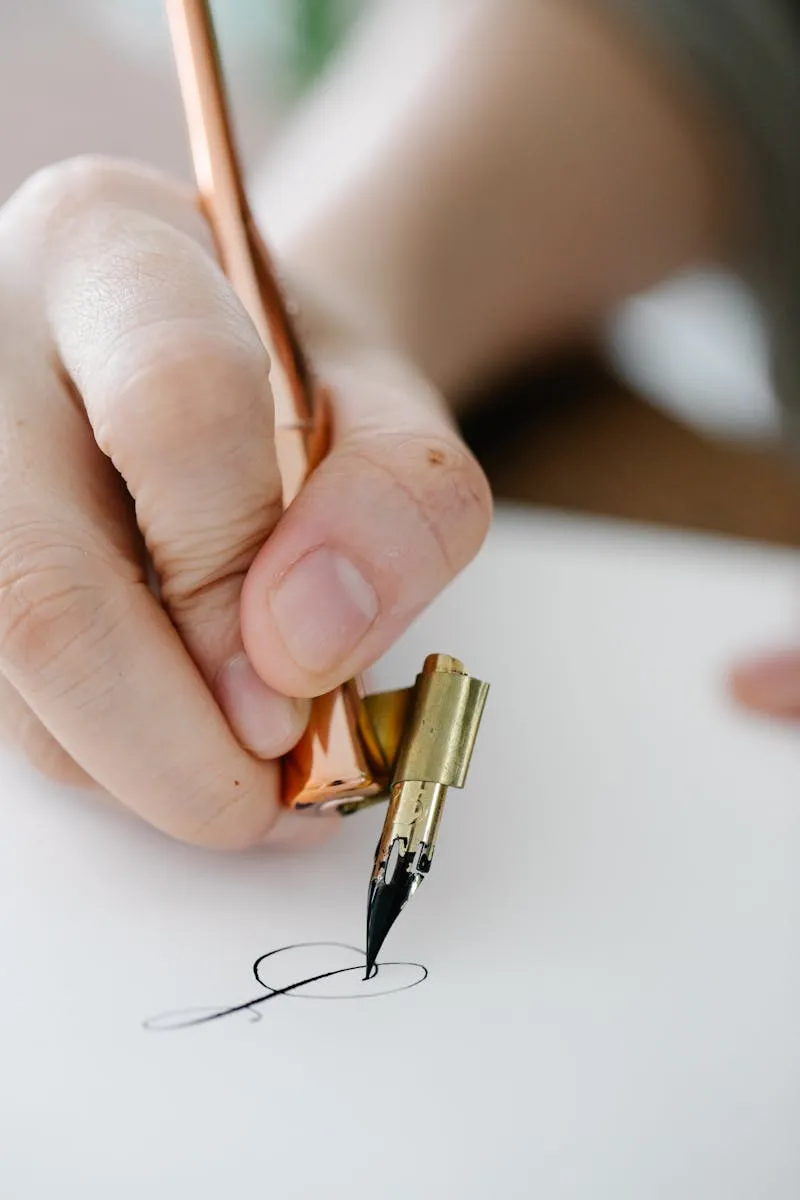
Writing kanji demands more from a pen than writing English. Each character requires precise stroke placement, consistent line width, and clean intersections. A pen that skips, blobs, or produces uneven lines turns kanji practice from a productive study session into a frustrating exercise. The right pen makes every stroke satisfying and every character legible.
We’ve tested over 30 pens specifically for kanji writing — on grid paper, in kanji practice notebooks, and during real study sessions with our Japanese textbooks. Here are the pens that perform best for Japanese character writing.
What Makes a Good Kanji Pen?
Fine Tip (0.3mm-0.5mm)
Kanji characters contain multiple strokes in a small space. A fine tip (0.3mm-0.5mm) provides the precision needed to keep strokes distinct and characters readable. Bold tips (0.7mm+) cause strokes to merge, especially in complex characters like 鬱 (utsu, depression — 29 strokes) or 驚 (odoroku, surprise — 22 strokes).
Consistent Ink Flow
Nothing derails kanji practice like a pen that skips. The beginning of each stroke must start cleanly, and the ink flow must remain consistent through curves and directional changes. Japanese gel pen engineering generally excels here, which is why most of our recommendations are Japanese-made.
Quick Dry Time
When writing kanji in a notebook, your hand moves across recently written characters constantly. Slow-drying ink smears across the page, ruining both your practice and your mood. Dry time under 3 seconds is ideal.
Comfortable for Extended Writing
Kanji practice sessions typically run 15-30 minutes. The pen needs a comfortable grip that prevents fatigue, and a weight that allows precise control without strain.
Best Overall: Pilot Juice Up 0.4mm
Price: ~$3 | Tip: 0.4mm gel | Ink: Water-based gel
The Pilot Juice Up 0.4mm is our top recommendation for kanji writing. The needle-point tip produces crisp, precise lines that keep even the most complex characters readable. Ink flow is exceptionally consistent — we’ve never experienced a skip during kanji practice with this pen.
The 0.4mm size hits the sweet spot: fine enough for detailed characters, bold enough to see your strokes clearly on practice paper. The ink dries in 2-3 seconds, virtually eliminating smear risk. And the synergy-tip technology means the writing experience is remarkably smooth for such a fine point.
Available in 24 colors, though we recommend black for primary kanji practice and red for marking corrections or highlighting readings.
Pros:
- Exceptional line precision at 0.4mm
- No skipping — ever
- Fast 2-3 second dry time
- Smooth writing despite fine tip
- 24 color options
- Affordable at ~$3
Cons:
- Ink runs out relatively quickly with heavy use
- Grip section is narrow (may not suit large hands)
- Not retractable (cap-type)
Best Budget: Pilot G2 0.5mm
Price: ~$1.50 | Tip: 0.5mm gel | Ink: Gel, dye-based
The Pilot G2 at 0.5mm (not the standard 0.7mm) is an excellent budget choice for kanji practice. The finer tip provides adequate precision for most characters, the rubber grip is comfortable for extended sessions, and the price is impossible to beat.
The main drawback for kanji is the G2’s slower dry time (5-7 seconds at 0.5mm), which requires more careful hand positioning. If you’re a patient writer or right-handed, this is a non-issue. Left-handed writers should look elsewhere.
Pros:
- Unbeatable price (~$1.50)
- Comfortable rubber grip
- Smooth writing
- Available everywhere
- Refillable
Cons:
- Slow dry time (5-7 seconds)
- 0.5mm is adequate but not as precise as 0.3-0.4mm
- Occasional ink inconsistency
Best for Precision: Uni-ball Signo DX 0.38mm
Price: ~$3 | Tip: 0.38mm gel | Ink: Water-based gel
For writers who want maximum precision, the Signo DX 0.38mm produces hair-thin lines that keep every stroke distinct, even in the most complex kanji. This is the pen used by many Japanese students and professionals for detailed note-taking and form-filling.
The ultra-fine tip requires a light touch — pressing too hard produces scratchy writing. But with the right pressure, the Signo DX delivers remarkable clarity. Characters written with this pen at 12mm grid size look as clean as printed text.
Pros:
- Ultra-precise 0.38mm lines
- Crisp, clean strokes
- Fast dry time
- Excellent for small characters
- Popular among Japanese students
Cons:
- Requires light touch (scratchy if pressed hard)
- Lines may be too thin for some learners
- Cap design (not retractable)
- Less forgiving of sloppy technique
Best Quick-Drying: Pentel EnerGel 0.5mm
Price: ~$3 | Tip: 0.5mm gel | Ink: Gel
The Pentel EnerGel dries faster than any gel pen we’ve tested — approximately 1-2 seconds. For left-handed kanji writers, this is the pen. No smearing, no planning around wet ink, just write and move on.
The writing quality is smooth and consistent, though the 0.5mm tip produces slightly bolder lines than the Juice Up 0.4mm. For beginners working with 15mm grid squares, this boldness is actually an advantage — you can see your strokes more clearly.
Pros:
- Fastest dry time (1-2 seconds)
- Best choice for left-handed writers
- Smooth, consistent ink flow
- Comfortable needle-point tip
- Retractable design
Cons:
- 0.5mm is the finest available option (no 0.3 or 0.4)
- Slightly bold for very complex characters in small grids
- Higher ink consumption than ballpoint alternatives
Best for Brush-Style Practice: Pentel Fude Touch Sign Pen
Price: ~$3 | Tip: Flexible felt brush | Ink: Water-based dye
Kanji were historically written with brushes, and many beautiful aspects of kanji design — the thick/thin stroke variations, the tapered endings, the flowing curves — come from brush writing. The Pentel Fude Touch Sign Pen bridges the gap between modern pen convenience and traditional brush aesthetics.
The flexible felt tip responds to pressure: light pressure produces thin lines, firm pressure produces thick lines. This allows you to practice the tome (stopping), hane (flicking), and harai (sweeping) stroke techniques that give kanji their characteristic beauty.
This isn’t an everyday kanji practice pen — it’s a supplementary tool for developing stroke awareness and calligraphic sensibility. Use it after your regular practice session for artistic exploration. For dedicated calligraphy supplies, see our Japanese calligraphy supplies guide.
Pros:
- Pressure-responsive brush tip
- Develops stroke awareness
- Beautiful, expressive characters
- Affordable brush pen alternative
- 12 color options
Cons:
- Not for precise, uniform kanji practice
- Requires pressure control skill
- Tip wears with heavy use
- Not suitable for small grid sizes
Best Mechanical Pencil for Kanji: Pentel Orenz 0.5mm
Price: ~$8 | Tip: 0.5mm mechanical pencil
For learners who prefer pencil (especially during the early stages when you need to erase frequently), the Pentel Orenz is exceptional. Its signature feature — a guide pipe that extends beyond the lead to prevent breakage — means you can write with a light, precise touch without constantly breaking leads.
Pencil is ideal for beginning kanji practice because you can erase and correct mistakes immediately. The Orenz produces clean, consistent lines that photograph well if you like scanning your practice pages into digital review systems.
Pair it with quality mechanical pencil leads in 2B hardness for the best balance of darkness and erasability.
Pros:
- Lead breakage prevention system
- Precise, consistent lines
- Erasable for correcting mistakes
- Comfortable for long sessions
- Quality Pentel construction
Cons:
- Pencil practice is less “permanent” feeling than pen
- Lines may be too light for review at a glance
- Requires compatible 0.5mm leads
Our Recommended Setup
For a complete kanji writing toolkit, we recommend:
- Primary practice pen: Pilot Juice Up 0.4mm (black) — for daily kanji drills
- Correction/annotation pen: Pilot Juice Up 0.4mm (red) — for marking readings and corrections
- Early-stage pencil: Pentel Orenz 0.5mm — for when you’re still making frequent mistakes
- Brush practice: Pentel Fude Touch Sign Pen — for weekly artistic practice sessions
- Notebook: Kokuyo Campus kanji practice notebook with 12mm cross-guide grid
Total cost: approximately $20 for a complete, high-quality kanji writing setup.
Frequently Asked Questions
Should I practice kanji with pen or pencil?
Start with pencil so you can erase and correct mistakes. Once your stroke order is consistent and you’re confident in basic proportions, switch to pen. Pen forces commitment to each stroke, which builds precision and confidence.
Is 0.5mm too thick for kanji?
For most learners and most characters, 0.5mm is fine — especially on 12mm or 15mm grid paper. For very complex characters (15+ strokes) in small grid sizes (8-10mm), 0.3-0.4mm provides better clarity. If you write a lot of complex kanji, invest in a 0.4mm pen.
Do I need a brush pen for kanji practice?
No. Brush pens are supplementary tools for developing aesthetic awareness, not daily practice necessities. Master basic kanji with a regular pen first, then explore brush writing for artistic enjoyment and deeper cultural understanding.
What about fountain pens for kanji?
Fountain pens with fine nibs (Japanese fine or extra-fine) can be excellent for kanji. The line variation from a fountain pen nib naturally produces the thick/thin strokes inherent in kanji design. The Platinum Preppy in fine is an affordable entry point. However, fountain pens require more maintenance and paper compatibility awareness than gel pens.
Why do my kanji look messy even with a good pen?
The pen is rarely the problem — technique is. Focus on stroke order (always follow the correct order), proportions (use cross-guide grid paper), and speed (write slowly and deliberately). A kanji practice notebook with cross-guide lines will improve your characters dramatically.