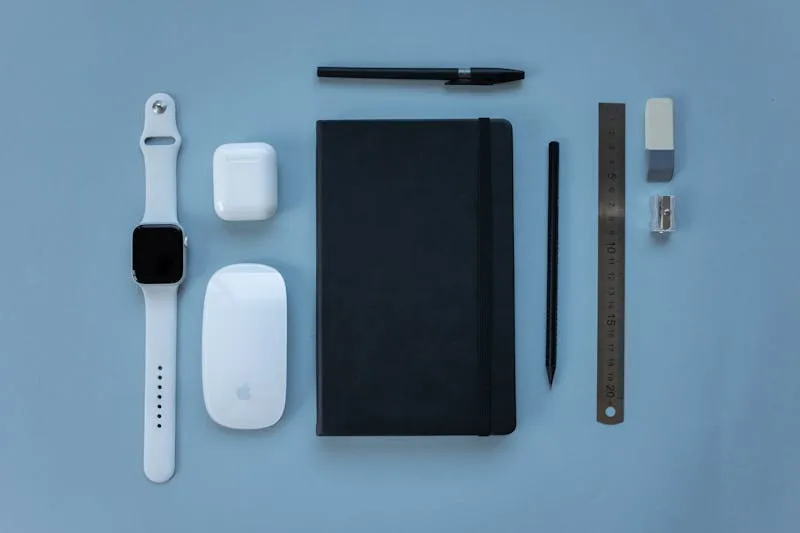
Learning Japanese requires the right tools. From textbooks and flashcard systems to specialized kanji practice notebooks, the right stationery can accelerate your language learning journey. This guide covers everything we recommend — tested by language learners living in Japan.
Living in Japan, we have access to the full ecosystem of study materials that Japanese students use every day, from elementary school through university entrance exams. We have tested countless notebooks, pens, flashcard systems, and textbook series over years of studying and teaching the language, and we have watched firsthand how the right tools can transform the learning process. Whether you are learning your first hiragana characters or cramming for the JLPT N1, this guide will help you choose the best tools for every stage.
The Japanese Study Tool Ecosystem
Japan takes studying seriously. Walk into any bunbougu-ya (stationery shop) or bookstore and you will find entire floors dedicated to study supplies: color-coded notebooks for different subjects, pens engineered for hours of comfortable writing, vocabulary cards in standardized sizes, and organizational accessories designed to keep everything within arm’s reach.
This is not accidental. Japanese students spend an enormous amount of time writing by hand. From first grade through university, handwriting is central to education. Kanji practice alone requires thousands of hours of repetitive stroke work. The stationery industry has responded by developing tools that reduce fatigue, improve legibility, and make the physical act of studying as efficient as possible.
For Japanese language learners, this ecosystem is a goldmine. The notebooks, pens, and systems that Japanese students rely on are perfectly suited to the unique demands of learning to read and write Japanese. Genkouyoushi (manuscript paper) with its gridded squares is purpose-built for practicing characters at the correct proportions. Fine-tip pens produce the crisp strokes that make kanji legible. Color-coding systems help you separate vocabulary, grammar, and reading notes at a glance.
How Japanese Students Study (And What We Can Learn)
Observing how Japanese students prepare for exams reveals study habits that any language learner can adopt:
- Handwriting for retention. Japanese students write vocabulary and kanji repeatedly by hand, not because they lack digital tools, but because research consistently shows that handwriting activates deeper memory encoding. We have found this to be true in our own studies: characters we write by hand stick far better than those we only type or review digitally.
- Color-coded note-taking. Many Japanese students use a three-color system: black for main notes, red for key terms and corrections, and blue for supplementary information. Some use a red transparent sheet (aka-shito) placed over red-written text to quiz themselves, since the red ink disappears under the red filter.
- Spaced repetition with physical cards. Long before Anki existed, Japanese students used tango-chou (vocabulary booklets) — small ring-bound cards they flip through on the train, at lunch, and between classes. The physical act of sorting known and unknown cards creates a natural spaced repetition system.
- Dedicated study spaces. Japanese students set up consistent study environments with all materials organized and accessible. Desk mats, pen cases, timer apps, and even specific background music playlists are part of the ritual.
We have adopted many of these habits ourselves and can confirm they work. The key takeaway: invest in quality physical tools, write by hand regularly, and create a consistent study routine.
Recommended Tool Combinations by Level
Not sure where to start? Here are the combinations we recommend based on your current level:
Absolute Beginner (Learning Hiragana/Katakana)
- A hiragana/katakana practice sheet set with stroke order guides
- A fine-tip pen (0.38 mm or 0.5 mm gel pen like the Pilot Juice Up)
- A basic textbook like Genki I or Minna no Nihongo
- A simple vocabulary notebook
Intermediate (JLPT N4-N3)
- A genkouyoushi notebook for kanji practice (200-character grid)
- A dedicated kanji workbook
- A flashcard system (physical or Anki with handwriting practice)
- Color-coded pens for grammar note-taking
- A planner for tracking study hours and goals
Advanced (JLPT N2-N1)
- A high-volume flashcard system for the 1,000+ additional kanji
- Multiple specialized notebooks (grammar, reading, listening notes)
- A comprehensive dictionary (electronic or app-based)
- Past JLPT exam books with answer-tracking notebooks
- A planner with weekly and monthly review schedules
Textbooks & Study Materials
Best Textbooks
Choosing the right textbook is your first and most important decision. Our Best Japanese Textbooks guide covers options for every level — from absolute beginner to advanced. Supplement with quality dictionaries for quick reference.
Writing Practice
Kanji Practice Notebooks
Dedicated kanji practice notebooks with proper grid sizes make character practice more effective. Our guide covers genkouyoushi paper, character spacing, and the best notebooks for each skill level.
Hiragana & Katakana Sheets
Master the basics with our printable hiragana and katakana practice sheets — designed with proper stroke order guides.
Best Pens for Kanji
Not all pens work well for kanji writing. Our Best Pens for Kanji guide covers brush pens, felt tips, and gel pens tested specifically for Japanese character writing. For everyday study notes, see our best Japanese gel pens roundup for smooth, quick-drying options.
Study Systems
Flashcard Systems
From physical cards to hybrid systems, our Japanese Flashcard Systems guide covers the most effective tools for vocabulary and kanji memorization.
Digital + Paper Study
Combine the best of both worlds with our guide to pairing apps with paper study — including Anki integration, handwriting recognition, and structured review.
JLPT Study Supplies
Preparing for the JLPT? Our JLPT Study Stationery Guide covers the best supplies and organizational tools for each test level.
Study Setup & Organization
Stationery for Studying
Build the perfect study setup with our Japanese Stationery for Studying guide — covering color-coding, organization, and efficiency.
Study Planner Setup
Stay on track with our Language Learning Planner Setup guide — featuring weekly schedules, habit tracking, and goal-setting templates.
Tips for Maximizing Your Study Tools
Setting Up a Dedicated Study Station
A consistent study environment reduces friction and builds habit. Here is how we set up ours:
- Desk mat or writing pad. A soft surface under your notebook prevents pen skipping and reduces wrist fatigue during long writing sessions. Midori and Kokuyo both make excellent desk mats in A3 size.
- Pen case within arm’s reach. Keep your primary writing pen, a red correction pen, a highlighter, and a mechanical pencil in a single case. We use the Kokuyo NeoCritz standing pen case because it doubles as a pen holder when opened.
- Timer visible at all times. Whether you use a physical kitchen timer or a phone app, tracking study sessions in 25-minute Pomodoro blocks helps maintain focus. Japanese students often use a benkyou taima (study timer) app that logs cumulative hours.
- Reference materials standing upright. A book stand (around $10 to $20) keeps your textbook open and at eye level, freeing both hands for writing. This is a small investment that makes a huge difference in comfort.
Combining Analog and Digital Tools
The most effective study routines we have seen combine handwriting with digital review:
- Learn new material by reading your textbook and taking handwritten notes in a dedicated notebook.
- Practice kanji by writing each new character 10 to 15 times in a genkouyoushi notebook, paying careful attention to stroke order.
- Create digital flashcards in Anki or a similar app, adding the same vocabulary you just practiced by hand.
- Review digitally during commutes, lunch breaks, or any downtime when you do not have your notebooks handy.
- Test yourself on paper weekly by writing out vocabulary and kanji from memory, without looking at prompts.
This hybrid approach leverages the deep encoding of handwriting with the convenience and spaced repetition algorithms of digital tools. In our experience, it produces noticeably better retention than either method alone.
Building a JLPT Prep Toolkit
Preparing for the Nihongo Nouryoku Shiken (Japanese Language Proficiency Test, or JLPT) requires targeted tools. Here is our recommended toolkit for each level:
N5/N4 (Beginner)
- Genki I and II (or Minna no Nihongo equivalent) as primary textbooks
- One genkouyoushi notebook per month for kanji practice
- Pilot Juice Up 0.38 mm pen (fine enough for detailed strokes)
- A ring-bound tango-chou vocabulary card set (Kokuyo brand, 3 x 5 cm size)
- A simple planner to track daily study goals
N3 (Intermediate)
- Nihongo So-matome or Shin Kanzen Master series for targeted test prep
- Multiple color-coded notebooks (grammar in one, vocabulary in another, reading practice in a third)
- A three-color pen like the Uni Jetstream 3-in-1 for efficient note-taking
- Anki with a pre-built N3 kanji deck, supplemented by handwriting practice
N2/N1 (Advanced)
- Shin Kanzen Master full series (grammar, reading, listening, vocabulary, kanji)
- A large genkouyoushi notebook for the 1,000+ new kanji at these levels
- Past exam books with a dedicated answer-tracking notebook
- A weekly planner with specific targets for each skill area (reading, listening, grammar, vocabulary)
- Noise-canceling headphones for listening practice sections
The key at every level is consistency. We recommend studying at least 30 minutes daily rather than cramming for hours on weekends. The physical tools help build that habit: when your study station is always ready and your materials are organized, sitting down to study feels natural rather than effortful.
Frequently Asked Questions
What stationery do I need to start learning Japanese?
At minimum: a good textbook, a genkouyoushi (Japanese writing practice) notebook, and a fine-tip pen (0.38 mm or 0.5 mm) for kanji practice. We also recommend a simple vocabulary notebook for logging new words and a red pen for self-corrections. Budget around $40 to $60 for this starter kit. See our beginner textbook guide for specific recommendations.
Is it better to write kanji by hand or type them?
Research consistently shows that handwriting kanji improves retention and recognition significantly compared to typing. The motor memory created by writing stroke-by-stroke activates deeper neural pathways. We recommend a combination of handwriting practice for new characters and digital review tools like Anki for spaced repetition of already-learned material.
How many kanji do I need to know for the JLPT?
JLPT N5 requires approximately 100 kanji, N4 around 300, N3 around 650, N2 around 1,000, and N1 around 2,000. For context, the Japanese government’s jouyou kanji (daily-use kanji) list contains 2,136 characters, which is roughly equivalent to the N1 requirement. Our JLPT guide has study strategies and stationery recommendations for each level.
What pen size is best for writing kanji?
We recommend 0.38 mm or 0.5 mm gel pens for kanji practice. The finer tip allows you to write detailed strokes clearly, especially for complex characters with many strokes. The Pilot Juice Up 0.38 mm and the Uni-ball Signo 0.38 mm are our top picks. For brush-style kanji practice, a Pentel Fude Touch Sign Pen gives you natural stroke variation.
How long does it take to learn Japanese?
The US Foreign Service Institute estimates approximately 2,200 class hours for English speakers to achieve professional proficiency in Japanese, making it one of the most time-intensive languages. However, with consistent daily study and the right tools, many learners reach conversational ability (around JLPT N3) within 18 to 24 months. The tools in this guide will not shorten the journey, but they will make every study session more productive and enjoyable.
Can I learn Japanese without handwriting practice?
While it is possible to reach conversational ability without extensive handwriting practice, we strongly advise against skipping it entirely. Handwriting reinforces character recognition, helps you understand stroke order (which affects how you look up unfamiliar characters in dictionaries), and builds a physical connection to the writing system that deepens your overall comprehension.