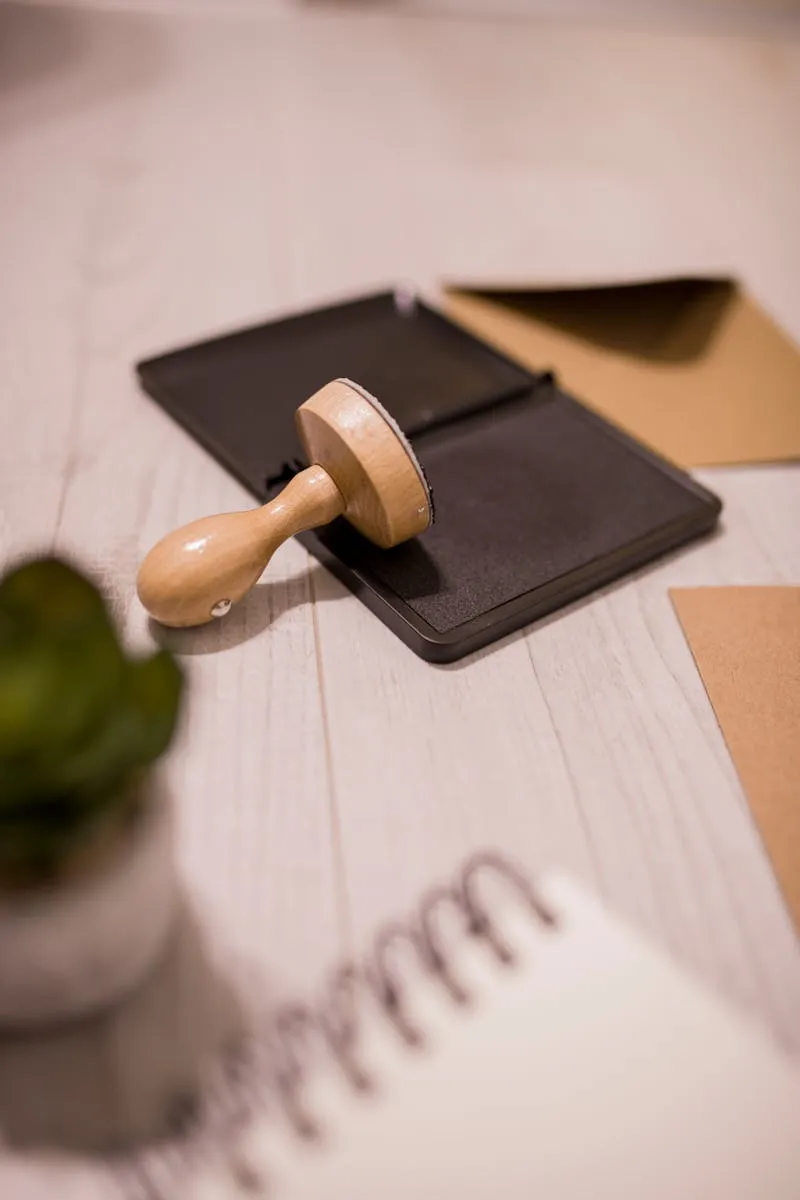
Japanese rubber stamps occupy a unique space in the crafting world. They’re not just decorative tools — they’re a sophisticated system for organizing planners, embellishing journals, creating handmade cards, and adding personality to everyday paper goods. Walk into a bunbougu-ya (stationery shop) in Japan and you’ll find entire display walls of tiny stamps: weather icons for daily tracking, miniature schedule stamps for planners, food illustrations for recipe journals, and hundreds of whimsical character designs.
The quality of Japanese stamps is distinctly superior to what most Western crafters are accustomed to. Japanese manufacturers use denser, finer-grained rubber that captures intricate detail. The stamps are precisely trimmed and mounted, producing clean, crisp impressions every time. And the design aesthetics — ranging from minimalist line art to kawaii characters — reflect a culture that takes paper goods and stationery seriously.
This guide covers the major Japanese stamp brands, the types of stamps available, how to use them effectively, and our recommendations for building a stamp collection that enhances your journaling and crafting practice.
Major Japanese Stamp Brands
Kodomo no Kao
Kodomo no Kao (meaning “children’s faces”) is the most prolific Japanese stamp brand, producing thousands of individual designs across dozens of themes. Their range is staggering — schedule stamps, weather stamps, animal stamps, seasonal stamps, message stamps, and elaborate illustration stamps. Quality is consistently excellent, with sharp detail reproduction and durable rubber.
Their stamp pads are equally impressive. Kodomo no Kao’s oil-based ink pads produce vibrant, smudge-resistant impressions that dry quickly on most paper types. The ink is available in over 20 colors, including pastels and metallic shades.
Kodomo no Kao stamps typically feature a clear acrylic mount that lets you see exactly where the stamp will land — essential for precise placement in planner grids and journal layouts.
Sanby
Sanby specializes in functional stamps — date stamps, address stamps, message stamps, and custom stamps for business and personal use. Their Iromoyo line of mini ink pads is particularly beloved in the journaling community. These tiny pads come in a gorgeous range of colors named after traditional Japanese hues — sakura-iro (cherry blossom pink), wasurenagusa (forget-me-not blue), moegi (sprout green).
The Sanby Iromoyo pads are oil-based, quick-drying, and fade-resistant. Their compact size makes them easy to carry in a pencil case or planner pouch. Many journaling enthusiasts collect the full set of 24 colors to create rainbow-gradient stamp effects.
Midori
Midori produces a smaller but beautifully curated selection of stamps and stamp accessories. Their rotation stamps — cylindrical stamps that roll across the page to create continuous border patterns — are a unique and clever design. Midori also makes excellent stamp pads and stamp cleaning supplies.
Midori’s aesthetic tends toward clean, sophisticated design — less kawaii and more Nordic-minimalist. Their stamps appeal to adults who want to embellish journals and planners without a cute or childish aesthetic.
ERIC (by Sanby)
ERIC is a collaboration line by Sanby that produces beautifully detailed illustration stamps. These larger stamps feature intricate botanical illustrations, architectural scenes, and natural motifs that are closer to art prints than typical craft stamps. They’re popular for creating elaborate journal covers, card fronts, and decorative pages.
Types of Japanese Stamps for Journaling
Planner and Schedule Stamps
These small, functional stamps are designed specifically for planner use. Common designs include:
- Time stamps: Clock faces with movable hands, or pre-set times for scheduling
- Weather stamps: Sun, clouds, rain, snow, and temperature icons for daily weather tracking
- Habit tracker stamps: Checkboxes, circles, and rating scales
- Day-of-week stamps: Monday through Sunday in English or Japanese
- Month stamps: January through December for header decoration
- To-do stamps: Checkbox, star, and priority-marker designs
These stamps turn blank planner pages into structured layouts. Instead of drawing checkboxes or weather icons by hand every day, a quick stamp creates a consistent, clean result in seconds.
Decorative and Illustration Stamps
Larger stamps designed for visual impact:
- Botanical stamps: Flowers, leaves, branches, and garden scenes
- Animal stamps: Cats, dogs, birds, rabbits — the full spectrum of cute
- Food stamps: Coffee cups, pastries, bento boxes, seasonal foods
- Travel stamps: Airplanes, suitcases, landmarks, passport-style frames
- Seasonal stamps: Cherry blossoms for spring, sunflowers for summer, maple leaves for autumn, snowflakes for winter
Message and Phrase Stamps
Pre-made text stamps for common journal entries and card-making:
- “Thank you” in English and Japanese
- “Happy Birthday” with decorative borders
- “To Do” and “Done” for task management
- “Important” and “Memo” for note flagging
- Days of the week and months in various fonts
Date and Number Stamps
Rotary date stamps that let you dial in a specific date. These are popular for journal entries, planner headers, and dating handmade cards. Sanby and Kodomo no Kao both make excellent rotary date stamps with clear, sharp number impressions.
Stamp Ink Pads: Choosing the Right One
Oil-Based Ink (Recommended for Most Uses)
Oil-based stamp inks dry quickly, resist smudging, and work on most paper types including glossy and coated surfaces. They’re the standard choice for journaling and planner use. Colors are vibrant and fade-resistant.
Our pick: Sanby Iromoyo Mini Stamp Pads — beautiful colors, compact size, excellent quality.
Water-Based Ink
Water-based inks dry more slowly and can smear if handled too quickly, but they’re easier to clean from stamps and produce softer, more watercolor-like impressions. They’re better for artistic stamping and card-making where you want a gentle, organic look.
Pigment Ink
Pigment inks are thicker and more opaque than dye-based inks. They work well on dark and colored papers where standard inks would be invisible. Pigment inks dry slowly and may require heat-setting for permanence. They’re the best choice for embossing — stamp with pigment ink, apply embossing powder, and heat to create raised, glossy designs.
How to Get Clean Stamp Impressions
Getting perfect stamp impressions takes a bit of technique. Here are the methods we’ve refined through years of daily stamping:
Surface Preparation
- Stamp on a firm, flat surface — a hard desk or a stamping mat, not a soft notebook resting on a cushion
- Make sure your paper is flat and smooth — wrinkles or bumps cause uneven impressions
- If using Tomoe River paper (like in Hobonichi planners), press gently — the thin paper picks up detail with less pressure
Inking Technique
- Tap the stamp onto the ink pad several times with even pressure — don’t press hard once
- Make sure the entire stamp surface is evenly coated with ink
- For large stamps, you may need to apply ink by pressing the pad against the stamp rather than the stamp against the pad
Stamping Technique
- Place the stamp firmly on the paper in a single motion — don’t slide or adjust once contact is made
- Apply even, firm pressure across the entire stamp surface
- For large stamps, press each quadrant individually to ensure full contact
- Lift the stamp straight up in a clean motion — don’t rock or twist
Cleaning
- Clean stamps after each use (or after switching ink colors) with a damp cloth or stamp cleaner
- Never use alcohol or harsh solvents on rubber stamps — they degrade the rubber
- Store stamps rubber-side up to prevent the rubber from compressing under weight
Building a Stamp Collection for Journaling
Essential Starter Set
If you’re just beginning with Japanese stamps, start with these functional basics:
- A set of weather stamps — You’ll use these daily for weather tracking
- A date stamp — Rotary date stamps are the most versatile
- A set of checkbox/to-do stamps — For daily task lists
- One decorative stamp you love — Something that sparks joy and motivates you to journal
- A quality stamp pad — Sanby Iromoyo in black is the essential starter ink
This starter set covers the most common journaling stamp uses for under $30. As you develop your stamping style, you can expand into decorative, seasonal, and thematic stamps. Stamps pair beautifully with washi tape — see our washi tape collection guide for creative ideas on building your collection.
Growing Your Collection
Once you have the basics, expand based on your journaling style:
- Mood trackers: Add emotion face stamps for daily mood logging
- Food journal: Collect food and drink stamps for meal tracking
- Travel journal: Add transportation, landmark, and map stamps
- Seasonal rotation: Build a set of seasonal stamps and rotate them quarterly
- Borders and frames: Frame stamps and border stamps elevate page layouts
Storage Solutions
As any stamp collector knows, organization becomes a challenge as your collection grows. We recommend:
- Acrylic stamp cases: Clear cases let you see your stamps at a glance
- Categorized storage: Organize by theme (weather, schedule, decorative, seasonal)
- Ink pad racks: Keep pads upright so the ink stays evenly distributed
- Travel kit: A small pouch with your most-used stamps and a compact ink pad for journaling on the go
Best Stamps for Specific Journal Types
Hobonichi Techo
Small, precise stamps work best in the Hobonichi’s compact daily grid. Weather stamps, tiny icon stamps, and mini date stamps fit perfectly in the margins and header areas. Avoid large decorative stamps that overwhelm the small page. For a full review of this popular planner, see our Hobonichi Techo review.
Bullet Journal
Bullet journals benefit from a mix of functional and decorative stamps. Header stamps for monthly and weekly layouts, checkbox stamps for rapid logging, and seasonal stamps for cover pages create a polished, consistent look without hand-drawing every element.
Traveler’s Notebook
Travel-themed stamps — airplanes, passport frames, landmark icons, map elements — complement the Traveler’s Notebook aesthetic beautifully. Larger illustration stamps from the ERIC line create stunning journal covers. Pair with brown and sepia ink pads for a vintage travel diary look.
Frequently Asked Questions
How long do Japanese rubber stamps last?
With proper care, quality Japanese rubber stamps last essentially forever. The rubber is dense and durable — it won’t degrade from normal use. The most common cause of stamp damage is improper cleaning (harsh solvents), improper storage (compression), or exposure to extreme heat. Store your stamps rubber-side up at room temperature, clean them gently after use, and they’ll last decades.
What paper works best with rubber stamps?
Smooth, uncoated paper produces the cleanest stamp impressions. Papers like Tomoe River (used in Hobonichi planners), Kokuyo Campus, and Rhodia dotpad all take stamp impressions beautifully. Highly textured or rough papers can produce spotty impressions because the stamp surface doesn’t make full contact. Glossy paper works with oil-based inks but can smear with water-based inks.
Can I use Japanese stamps with Western ink pads?
Yes, Japanese rubber stamps work with any stamp ink pad. However, we recommend Japanese ink pads (especially Sanby Iromoyo) for their color range, quality, and compact size. Western ink pads like StazOn and Memento are also excellent choices, particularly for specialty applications like non-porous surfaces and fabric stamping.
Are Japanese rubber stamps safe for children?
Most Japanese craft stamps are safe for supervised children. The stamps themselves are non-toxic, and most ink pads use non-toxic formulas. However, small stamps and parts can be choking hazards for very young children. Kodomo no Kao’s larger stamps with wooden handles are the most child-friendly option. Always supervise children during crafting activities.
How do I clean rubber stamps?
Gently wipe the stamp surface with a slightly damp cloth or a dedicated stamp cleaner pad after each use. For stubborn ink, use a soft toothbrush with water. Never use alcohol, acetone, or harsh chemicals — these degrade rubber and reduce stamp life. Allow stamps to air dry completely before storing.
Final Thoughts
Japanese rubber stamps transform the journaling and crafting experience from a purely manual process to something that’s part creative expression, part efficient system. The quality of Japanese stamps — the detail, the precision, the thoughtful designs — reflects a culture that has elevated stationery and paper goods to an art form.
Start with a small functional set: weather stamps, a date stamp, and a quality ink pad. Use them daily in your planner or journal, and you’ll quickly discover how stamps streamline your routine while adding personality to your pages. From there, let your collection grow naturally based on the themes and styles that resonate with your journaling practice.
If you’re interested in traditional Japanese lettering alongside stamping, our Japanese calligraphy supplies guide covers brushes, inks, and paper for getting started. Stamps also pair beautifully with decorative tape — see our washi tape ideas guide for creative inspiration. The world of Japanese stamps is vast and endlessly delightful. Welcome in.
Check Sanby Iromoyo Ink Pads on Amazon | Check Kodomo no Kao Stamps on Amazon