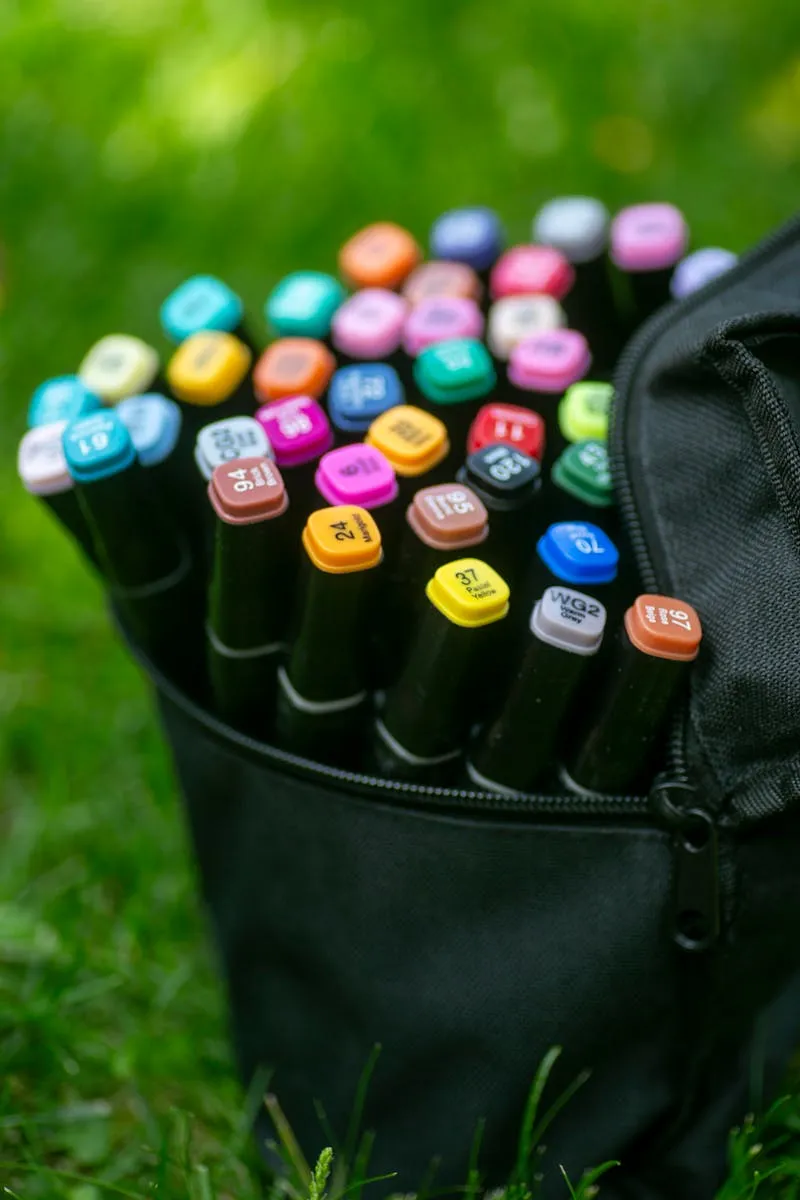
Japanese pencil cases are engineered with the same thoughtfulness that Japanese brands bring to their pens and notebooks. These aren’t just pouches that hold pens — they’re designed to organize your tools, fit your work style, and look good on your desk. From standing cases that transform into pen cups to slim canvas pouches that slide into any bag, Japanese manufacturers have spent decades perfecting the pencil case.
Living in Japan, we see these cases in every office, school, and cafe. They’re an integral part of the stationery culture here, and the designs are clever in ways that Western pencil cases simply aren’t. Here are the best options available.
Best Overall: Kokuyo NeoCritz
Price: ~$15 | Capacity: 15-20 pens | Material: Polyester
The Kokuyo NeoCritz is the pencil case that made standing cases mainstream. Unzip it and fold the top section down, and it transforms into a stable pen cup on your desk. This solves the eternal pencil case problem: how do you access your pens quickly without dumping them all out?
The standing design is genuinely practical. During study sessions, your most-used pens are visible and accessible — no digging through a pile of tools. When you’re done, zip it up and toss it in your bag. The transformation takes two seconds.
The standard NeoCritz holds 15-20 pens comfortably. The polyester exterior is durable and available in multiple colors. An internal divider pocket holds erasers, leads, and small accessories separately from your pens.
Pros:
- Standing design transforms into pen cup
- Holds 15-20 pens
- Internal divider pocket
- Durable polyester construction
- Multiple color options
- Very popular in Japan (proven design)
Cons:
- Bulky when fully loaded
- Standing position needs a flat, stable surface
- Zipper can catch on pen clips
- Basic NeoCritz lacks the bells and whistles of premium versions
Best Slim Design: Lihit Lab Teffa Pen Case
Price: ~$10 | Capacity: 8-10 pens | Material: Polyester
For minimalists who carry a curated selection of pens rather than an entire collection, the Lihit Lab Teffa is ideal. This slim, book-style case opens flat to reveal your pens in a single layer — every tool visible at a glance, no stacking, no digging.
The case measures about 7.5 x 2 x 1 inches and slides easily into a bag pocket. A single zipper runs along three sides, opening the case like a book. The interior is clean — no dividers or pockets, just a simple hold for your essential tools.
We carry this case daily with: one Uni Jetstream, one Pilot Juice Up, one red pen, one mechanical pencil, one Tombow Mono eraser, and one highlighter. Everything fits without bulk.
Pros:
- Slim, lightweight, and portable
- Opens flat for full visibility
- Clean, simple design
- Fits easily in bag pockets
- Affordable at ~$10
Cons:
- Limited capacity (8-10 pens)
- No internal organization pockets
- Not suitable for large collections
- Can’t stand upright
Best for Students: Sun-Star Delde Sliding Pencil Case
Price: ~$12 | Capacity: 20+ pens | Material: Polyester/canvas
The Sun-Star Delde uses a clever sliding mechanism: push the body down and the case transforms into a standing pen cup, similar to the NeoCritz but with a different execution. The sliding action is satisfying and the resulting cup is wider and more stable than the NeoCritz.
Students love the Delde because it holds a lot — 20+ pens, erasers, rulers, and small accessories — while maintaining easy access in standing mode. The available designs range from solid colors to character collaborations (Snoopy, Rilakkuma, Sanrio), making it a statement piece on a student’s desk.
Pros:
- Large capacity (20+ pens)
- Sliding transformation is fun and functional
- Wide, stable standing cup
- Many design options (solid colors and character designs)
- Durable construction
Cons:
- Bulky — not ideal for minimal carry
- Sliding mechanism adds complexity
- Character designs may not suit professional settings
- Can be slightly hard to find in solid colors in the US
Best Premium: Kokuyo NeoCritz Flat
Price: ~$20 | Capacity: 12-15 pens | Material: Polyester with structured frame
The NeoCritz Flat is the refined, adult version of the standard NeoCritz. It uses a structured frame that allows the case to stand upright while opening wide for full access. The flat opening means you can see all your pens simultaneously rather than looking down into a cup.
The design feels premium without being pretentious. The materials are higher quality than the standard NeoCritz, the zippers are smoother, and the structured shape maintains itself in a bag instead of collapsing. It’s the pencil case equivalent of a well-tailored jacket — functional elegance.
Pros:
- Structured frame holds shape
- Wide flat opening for easy access
- Premium materials and zippers
- Professional appearance
- Stands upright and opens wide simultaneously
Cons:
- Most expensive option at ~$20
- Slightly less capacity than standard NeoCritz
- Structured frame means less flexibility
- Limited color options
Best Budget: Lihit Lab Book-Style Pen Case
Price: ~$8 | Capacity: 10-12 pens | Material: Polyester
Lihit Lab’s standard book-style case is a no-frills workhorse at a great price. The dual-zipper design opens the case like a book, with a mesh pocket on one side for small accessories and an open compartment on the other for pens. The construction is solid despite the budget price.
This is the case we recommend for people who don’t want to think about pencil cases — it works, it’s affordable, it fits in any bag, and it doesn’t demand attention. The mesh pocket is genuinely useful for keeping eraser refills, pencil leads, and USB drives separate from pens.
Pros:
- Affordable at ~$8
- Book-style opening
- Mesh accessory pocket
- Solid construction for the price
- Compact and bag-friendly
Cons:
- Basic design
- No standing feature
- Limited color options at this price
- Mesh pocket is small
Best for Large Collections: Kokuyo C2 Tray Pencil Case
Price: ~$18 | Capacity: 25+ pens | Material: Polyester
For stationery enthusiasts who carry substantial collections — multiple pen types, highlighter sets, markers, rulers, and accessories — the Kokuyo C2 opens into a two-tray system. The upper tray slides out to reveal a lower compartment, doubling the organized storage space.
This is the case for people who own Mildliner sets, multiple pen colors, and various tools for bullet journaling or language study. The two-tray design keeps frequently used items on top and reserves the bottom for less-used tools.
Pros:
- Largest organized capacity
- Two-tray design for categorization
- Holds 25+ pens plus accessories
- Great for stationery collections
- Durable construction
Cons:
- Bulky — not for minimal carry
- Heavier than single-compartment cases
- Can be overkill for most users
- Expensive at ~$18
How to Choose Your Pencil Case
By Carry Style
- Minimal (5-8 items): Lihit Lab Teffa
- Standard (10-15 items): Kokuyo NeoCritz or Lihit Lab Book-Style
- Full collection (15-25+ items): Sun-Star Delde or Kokuyo C2
By Use Case
- Desk worker: Standing case (NeoCritz) for desktop access
- Student: Large capacity with standing feature (Delde)
- Professional: Slim, understated design (Lihit Lab Teffa or NeoCritz Flat)
- Artist/journaler: Tray case (C2) for varied tools
By Budget
- Under $10: Lihit Lab Book-Style
- $10-15: Kokuyo NeoCritz or Sun-Star Delde
- $15-20: Kokuyo NeoCritz Flat or C2
Frequently Asked Questions
Why are Japanese pencil cases better than Western ones?
Japanese manufacturers design pencil cases with specific use cases in mind — standing function, tray organization, book-style opening — rather than just making “a pouch that holds pens.” The engineering is thoughtful, and the quality control is consistent. Western pencil cases are catching up, but Japanese designs remain the most innovative.
How many pens should a pencil case hold?
Most people need 8-12 items: 2-3 pens (black, red, blue), 1 mechanical pencil, 1 eraser, 2-3 highlighters, and a few accessories. If you need more than 15 items regularly, consider whether you’re carrying tools you rarely use. A curated selection beats a bloated collection for daily carry. Not sure which mechanical pencil to include? Our best Japanese mechanical pencils guide covers the top picks for students and professionals.
Can I wash a polyester pencil case?
Most polyester pencil cases can be hand-washed with mild soap and air-dried. Check the manufacturer’s care instructions. Don’t machine wash — the agitation can damage zippers and internal structures. Spot cleaning with a damp cloth handles most stains.
Do standing pencil cases actually stay upright?
Yes, the Kokuyo NeoCritz and Sun-Star Delde both stand stably on flat surfaces. The NeoCritz is slightly less stable when lightly loaded (it needs some pen weight to stay upright). The Delde is more stable due to its wider base. Both are reliable on desks and tables.
What should I look for in a pencil case for school?
Capacity (15+ items to hold the full toolkit), durability (polyester or canvas over leather for daily abuse), easy access (standing or book-style opening), and a design your student actually likes. The Sun-Star Delde checks all these boxes and comes in designs that appeal to students.