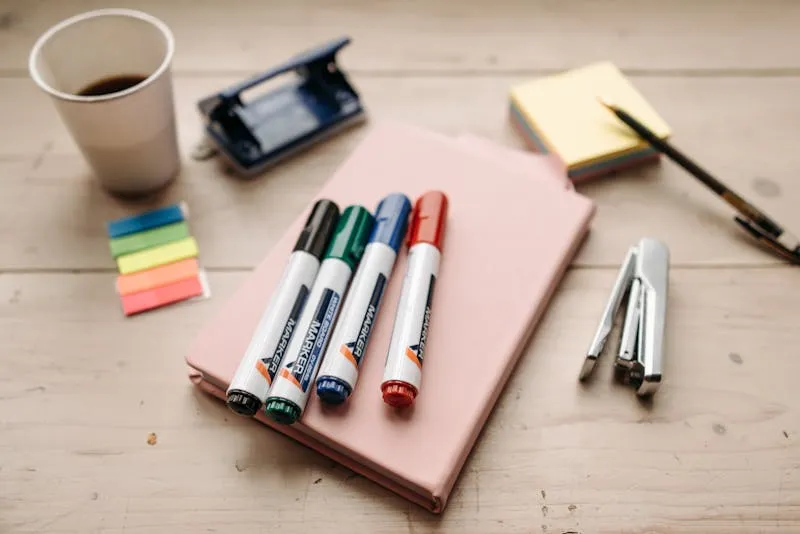
Walk into any Japanese university or high school and you’ll notice something immediately: the stationery is different. Students here don’t just grab whatever pen is on sale — they curate their tools with the same care a chef selects knives. There’s a cultural philosophy behind it: the right tools make the work itself more enjoyable, and when the work is more enjoyable, you do more of it and do it better.
Living in Japan, we’ve spent years exploring the stationery shops, bunbougu-ya, and limited-edition collections that students here rely on. We’ve tested hundreds of pens, notebooks, highlighters, erasers, and organizational tools, and we’ve talked to Japanese students about what actually sits in their pencil cases day after day. This guide distills everything we’ve learned into a single, practical resource.
Whether you’re building your kit from scratch or upgrading from generic office supplies, this guide covers every category you need. We’ve organized it by product type and included specific recommendations at every price point. Let’s build the ultimate student kit.
Pentel EnerGel 0.5mm Gel Pen
The fastest-drying gel pen on the market at just 1-2 seconds — a game-changer for left-handed students and fast writers. The vivid, smooth ink and needle-tip design make it our top pick for everyday note-taking.
Check Price on Amazon → Free US shipping on eligible orders *Price approximate at time of writing. Check retailer for current price.Pens: The Foundation of Your Kit
Good pens are the single most impactful upgrade you can make to your study setup. The difference between a cheap ballpoint and a quality Japanese gel pen isn’t subtle — it’s the difference between writing being a chore and writing being something you actually look forward to. Here are our top picks by type.
Gel Pens for Note-Taking
For primary note-taking, we recommend a reliable gel pen with a 0.5mm or 0.38mm tip. Japanese gel pens write smoother, dry faster, and produce more vivid lines than anything else at their price point.
Top pick: Pentel EnerGel 0.5mm ($2.75) — The fastest-drying gel pen on the market at just 1-2 seconds. This is a game-changer for left-handed students and fast writers who can’t afford to smear their notes. The ink is vivid, the needle-tip design gives excellent visibility, and the pen is refillable so you’re not constantly buying replacements. We covered this pen extensively in our gel pen roundup.
Budget pick: Pilot G2 0.7mm ($1.50) — The most cost-effective quality gel pen in existence. At ~$1.50 per pen or about ~$1 each in multi-packs, the G2 delivers smooth, reliable writing that outperforms anything in its price range. The 0.7mm tip is bold and easy to read in notes. You can read our full Pilot G2 review for more details.
Fine-tip pick: Uni-ball Signo DX 0.38mm (~$3) — If you write small or cram a lot of information onto each page, the Signo DX’s ultra-fine 0.38mm tip lets you write with remarkable precision without sacrificing smoothness. It’s the favorite pen of many Japanese students we’ve talked to, and it’s perfect for annotating textbooks and filling in planner grids.
Check Pentel EnerGel on Amazon | Check Pilot G2 on Amazon
Mechanical Pencils for Math and Diagrams
Japanese mechanical pencils are engineered to a standard that puts Western office-supply pencils to shame. For math, science, and any subject involving diagrams or graphs, a good mechanical pencil is essential.
Top pick: Pentel Orenz Nero 0.5mm (~$22) — The Orenz Nero’s automatic advance mechanism means the lead feeds forward continuously as you write — no clicking required. The lead never extends past the protective guide pipe, which means virtually zero breakage. It’s the pencil Japanese engineering students reach for, and after testing it through a semester of notes, we understand why. See our best mechanical pencils guide for more options.
Budget pick: Pentel Graph 1000 for Pro 0.5mm (~$8) — A legendary drafting pencil beloved by architects, engineers, and students. The knurled metal grip provides excellent control, the weight is perfectly balanced, and the 0.5mm lead writes with clean precision. At $8, it’s the best value in premium mechanical pencils.
Everyday pick: Uni Kuru Toga 0.5mm (~$6) — The Kuru Toga’s rotating mechanism turns the lead slightly with each stroke, maintaining a consistently sharp point and even line width. This is especially useful during long writing sessions where a standard pencil’s lead would develop a flat spot and produce increasingly thick, smudgy lines.
Check Pentel Orenz Nero on Amazon | Check Uni Kuru Toga on Amazon
Multi-Pens for Efficiency
Carrying multiple pens wastes space and time. Japanese multi-pens solve this by combining several ink colors (and sometimes a mechanical pencil) in a single body. They’re incredibly popular among Japanese students who color-code their notes.
Top pick: Uni Jetstream 4&1 (~$12) — Four colors of Jetstream ballpoint ink (black, blue, red, green) plus a 0.5mm mechanical pencil, all in one sleek pen. The Jetstream ink is the smoothest ballpoint ink we’ve ever tested — it writes almost as smoothly as gel ink but dries instantly. We reviewed the Jetstream line in our Uni Jetstream review.
Budget pick: Pilot Hi-Tec-C Coleto (~$6 + refills) — A customizable multi-pen system where you choose the body and then insert your preferred ink refills from Pilot’s enormous color range. You can build a 3, 4, or 5-color pen with exactly the colors you want. It’s the most popular multi-pen system among Japanese students.
Notebooks: Where Your Notes Live
The right notebook makes your notes easier to take, easier to read, and easier to review. Japanese notebooks are designed with students in mind — the paper quality, ruling styles, and binding all serve the goal of creating a better studying experience.
For Everyday Class Notes
Top pick: Kokuyo Campus Notebook B5 (~$3) — The standard-issue notebook of Japanese students for good reason. The semi-B5 size is large enough for substantial note-taking but still fits in a bag. The paper handles gel pen and mechanical pencil beautifully with no feathering or bleed-through. Kokuyo’s proprietary dotted ruling helps you write in straight lines and create neat margins. At $3 per notebook, you can afford to dedicate one per subject. We have a detailed Kokuyo Campus review if you want to learn more.
Loose-leaf option: Kokuyo Campus Smart Ring Binder (~$8) — If you prefer to rearrange and reorganize your notes, the Smart Ring binder uses the same excellent Campus paper in loose-leaf form. The slim binder ring opens easily and lies flat — a huge improvement over clunky Western ring binders. You can pull pages out, reorder them, and file them by topic after class.
For a deeper comparison of the best Japanese notebooks, see our best Japanese notebooks roundup.
For Important or Long-Term Notes
Premium pick: Midori MD Notebook A5 (~$12) — When your notes need to last — for a thesis, a long-term project, or a course you’ll reference for years — the Midori MD is worth the upgrade. The cream-colored MD paper is silky smooth, handles fountain pen and gel pen ink beautifully, and shows shading and color with remarkable fidelity. The thread-bound spine lays completely flat, which makes writing across the center gutter effortless. Check our Midori MD review for the full breakdown.
Highlighters: Color-Coding Made Better
Color-coding is the backbone of effective studying, and Japanese highlighters are a massive upgrade over the garish, bleed-through neon markers you find at Western office supply stores. The Japanese approach favors softer, easier-on-the-eyes colors that you can actually stare at for hours without getting a headache.
Mild Highlighters for Textbooks and Notes
Top pick: Zebra Mildliner ($1.50 each / $12 for set of 10) — The Mildliner revolutionized highlighting when it launched in Japan, and it’s since taken over the global stationery community. Instead of harsh neons, Mildliners use soft, muted colors — mild yellow, mild pink, mild blue, mild green — that are genuinely pleasant to look at. The dual-tip design gives you both a broad chisel tip and a fine bullet tip in each pen. We reviewed them in detail in our Zebra Mildliner review.
The 25-color range lets you create a detailed color-coding system: one color for definitions, another for key dates, another for formulas, and so on. Unlike harsh neon highlighters, Mildliners don’t obscure the text beneath them, even on thinner paper.
Budget pick: Pilot FriXion Light Pastel (~$2 each) — Erasable highlighters. Yes, really. If you highlight something by mistake, or if you want to reuse a textbook, the FriXion Light lets you erase highlights cleanly with the built-in eraser. The pastel colors are soft and attractive, though not quite as refined as the Mildliners.
Check Zebra Mildliner Set on Amazon
Erasers: Clean Corrections Matter
A good eraser sounds like a minor thing until you’ve experienced the frustration of a bad one — smudging instead of erasing, tearing the paper, or leaving colored residue behind. Japanese erasers set the global standard, and upgrading is cheap and immediately noticeable.
Top pick: Pentel Ain Hi-Polymer Eraser ($1.50) — Our favorite all-around eraser. It erases cleanly and completely without tearing paper, and it produces minimal crumb debris. The soft texture means light pressure is enough — you don’t have to scrub. We tested the top Japanese erasers in our best Japanese erasers guide.
Precision pick: Tombow Mono Zero Eraser (~$5) — A pen-shaped eraser with a tiny 2.3mm round tip that lets you erase individual characters or fine details without disturbing surrounding text. This is invaluable for correcting small mistakes in tight spaces, erasing within diagrams, and cleaning up pencil sketches.
Classic pick: Tombow Mono Eraser (~$1) — The iconic blue-white-black eraser that’s been a staple in Japanese pencil cases for decades. It erases pencil graphite cleanly and efficiently. At ~$1, there’s no reason not to have one.
Check Tombow Mono Zero on Amazon
Organizational Tools: Structure Your Studies
Japanese students are serious about organization. The right tools help you plan study sessions, track assignments, and keep all your materials accessible. Here are the tools that make the biggest difference.
Pencil Cases
Top pick: Kokuyo NeoCritz (~$15) — A pencil case that transforms into a pen stand when you fold it open. This means your pens, pencils, and highlighters stand upright on your desk during study sessions, making them easy to grab and put back. When closed, it’s a compact pouch that fits neatly in a bag. This is the pencil case we see most often on Japanese university desks.
Budget pick: Lihit Lab Teffa Pen Case (~$8) — A book-style case that opens flat, giving you a panoramic view of all your tools. It’s slim enough to slip into a bag without adding bulk, and the zipper is smooth and reliable.
Check Kokuyo NeoCritz on Amazon
Sticky Notes and Tabs
Top pick: Kanmido Coco Fusen (~$4) — Tiny sticky-note tabs on a roll that adheres to the cover of your notebook or textbook. When you need a tab, you just peel one off — they’re always right there, attached to whatever you’re working on. We use these constantly for marking important textbook pages during study sessions.
Classic pick: Stalogy Writable Sticky Notes (~$5) — High-quality sticky notes with a gentle adhesive that won’t damage book pages. The paper accepts pen ink without feathering, which sounds trivial until you’ve tried writing on a cheap sticky note with a gel pen and watched the ink bleed everywhere.
If you are studying Japanese, sticky tabs are ideal for flagging key pages in your Japanese dictionary and textbooks for quick reference during review sessions.
Check Kanmido Coco Fusen on Amazon
Rulers and Templates
Top pick: Kutsuwa HiLine Folding Ruler (~$5) — A 30cm ruler that folds in half to 15cm for easy pencil-case storage. It’s made from durable aluminum alloy and has both metric and imperial markings. For drawing lines in notebooks, underlining headings, and creating neat tables in your notes, a compact ruler is more useful than you’d expect.
Building Your Kit: Three Budget Levels
The Essentials Kit (~$20)
For students on a tight budget, this kit gives you the best possible tools at the lowest cost:
- Pilot G2 0.7mm (3-pack) — $4.50
- Kokuyo Campus Notebook B5 (5-pack) — ~$12
- Tombow Mono Eraser — ~$1
- Zebra Mildliner (3-color set) — ~$4.50
The Upgraded Kit (~$50)
A meaningful step up in writing quality and organization:
- Pentel EnerGel 0.5mm (3-pack) — ~$8
- Uni Kuru Toga 0.5mm — ~$6
- Kokuyo Campus Notebook B5 (5-pack) — ~$12
- Zebra Mildliner (10-color set) — ~$12
- Pentel Ain Hi-Polymer Eraser — ~$1.50
- Tombow Mono Zero Precision Eraser — ~$5
- Kanmido Coco Fusen tabs — ~$4
The Premium Kit (~$100)
The full Japanese student experience — no compromises:
- Pentel EnerGel 0.5mm (3-pack) — ~$8
- Uni Jetstream 4&1 multi-pen — ~$12
- Pentel Orenz Nero 0.5mm — ~$22
- Kokuyo Campus Notebook B5 (5-pack) — ~$12
- Midori MD Notebook A5 — ~$12
- Zebra Mildliner (25-color set) — ~$22
- Pentel Ain Hi-Polymer Eraser — ~$1.50
- Tombow Mono Zero Precision Eraser — ~$5
- Kokuyo NeoCritz pencil case — ~$15
- Kanmido Coco Fusen tabs — ~$4
Study Tips from Japanese Students
Having spent time around Japanese students, we’ve picked up a few study habits that pair perfectly with these tools:
The Three-Color Note Method. Many Japanese students use three ink colors: black for main content, blue for supplementary information, and red for critical points they must memorize. This is simple, effective, and works with any multi-pen or set of gel pens.
Highlight After, Not During. Rather than highlighting while reading for the first time, Japanese study culture emphasizes reading the material first, then going back to highlight key points. This produces better-targeted highlighting because you understand the full context before deciding what’s important.
Dedicated Notebooks per Subject. Instead of one giant binder, Japanese students typically use separate thin notebooks for each subject. The Campus B5 is designed for exactly this approach — they’re thin enough to carry several and affordable enough to dedicate one per class.
For more stationery recommendations and reviews, browse our Japanese stationery beginner’s guide or explore our picks for the best Japanese gel pens.
Frequently Asked Questions
Where can I buy Japanese study supplies in the US?
Amazon carries virtually all the products in this guide and is the most convenient option for most US buyers. Specialty retailers like JetPens offer the widest selection of Japanese stationery with detailed product descriptions and comparison tools. Muji stores (in major US cities) and Kinokuniya bookstores also carry Japanese stationery in person.
Are Japanese school supplies worth the extra cost?
In our experience, absolutely. The price difference between a generic pen and a quality Japanese pen is often just $1-2, but the improvement in writing comfort and ink quality is dramatic. Japanese notebooks cost slightly more than generic ones but the paper quality is noticeably better — no feathering, no bleed-through, and a smoother writing surface. Over a semester, the total cost difference is minimal, but the daily experience is significantly better.
What’s the best pen for taking notes quickly?
The Pentel EnerGel 0.5mm is our top pick for fast note-taking. Its rapid 1-2 second dry time means you’ll never smear your notes, even when writing at speed. The smooth ink flow means the pen keeps up with your hand without skipping. For left-handed students, the EnerGel is particularly transformative.
Can I use these supplies for bullet journaling too?
Absolutely. Many of the products in this guide — Mildliners, fine-tip gel pens, the Midori MD notebook — are staples in the bullet journaling community. If you’re interested in journaling with Japanese stationery, check out our Hobonichi Techo review for a planner-journal approach, or our beginner’s guide to Japanese stationery for broader recommendations.
What size notebook should I get?
For class notes, B5 (6.9 x 9.8 inches / 17.6 x 25 cm) is the Japanese standard and our recommendation. It’s slightly smaller than US letter size, which makes it easier to carry, and the proportions work well for structured note-taking. For personal notes, projects, or journaling, A5 (5.8 x 8.3 inches / 14.8 x 21 cm) is a popular compact alternative.
How do I set up a color-coding system for notes?
Start simple. We recommend three colors minimum: black for main content, a warm color (red or pink Mildliner) for important facts, and a cool color (blue or green Mildliner) for definitions or supplementary info. Once that feels natural, you can add more colors — orange for examples, purple for connections between topics, yellow for questions you need to research. The key is consistency: always use the same color for the same type of information so your brain learns to recognize categories at a glance.