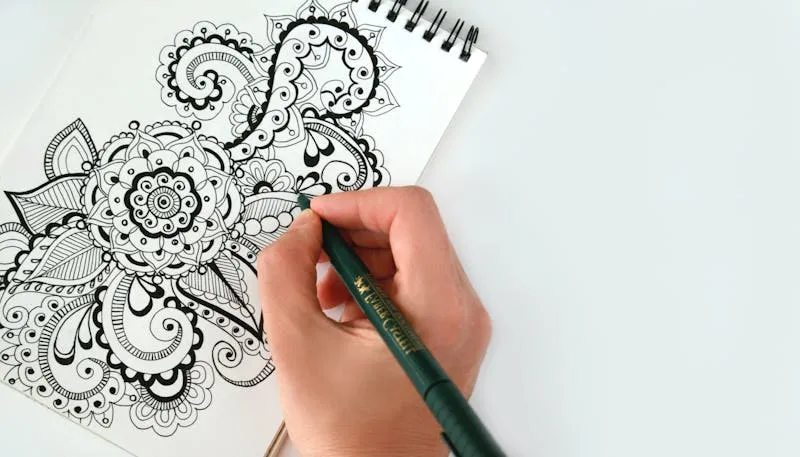
Sakura Pigma Micron (6-Pen Set)
SakuraThe iconic archival fineliner used by illustrators, architects, and journalers worldwide. Pigment-based ink is waterproof, lightfast, and permanent once dry.
Best for: Illustration, journaling, technical drawing, archival documentation
- Archival Pigma pigment ink — waterproof and lightfast
- Precise calibrated tip sizes from 005 (0.20mm) to 08 (0.50mm)
- Safe under alcohol-based markers (Copic compatible)
- Bleed-resistant on most quality papers
- Brush tip variant available for expressive line work
Some pens earn legendary status. The Sakura Pigma Micron is one of them. Since 1982, this Japanese fineliner has been the go-to choice of illustrators, architects, comic artists, journalers, and anyone who needs precise, permanent lines on paper. It’s the pen that defined the pigment ink fineliner category — and after testing the full range, we can tell you that its reputation is well deserved.
Sakura, based in Osaka, Japan, originally developed the Pigma ink technology for scientific and archival applications. The key innovation was a pigment-based ink (as opposed to dye-based) that bonds permanently to paper fibers, resists water, and won’t fade under UV light. That same archival-quality ink is what makes the Micron special for artists and writers: your work lasts.
We’ve tested every tip size in the Pigma Micron lineup across multiple paper types and use cases — from detailed pen-and-ink illustration to daily journaling to architectural sketching. Here’s our honest, thorough review.
Quick Verdict: The Sakura Pigma Micron is an outstanding fineliner that delivers on its core promises: precise tip sizes, archival permanence, and reliable performance. It’s not the smoothest-writing pen in the world, and the tips will wear down with heavy use, but for technical drawing, illustration, journaling, and any application where permanence matters, it remains the industry standard for good reason. Rating: 4.4 / 5.0
Product Overview
Approx. ~$2.50 per pen / ~$11 (6-pen set) Brand: Sakura (Osaka, Japan) Ink Type: Pigma pigment ink (archival) Tip Sizes: 005 (0.20mm), 01 (0.25mm), 02 (0.30mm), 03 (0.35mm), 05 (0.45mm), 08 (0.50mm), 1 (0.25mm felt tip), Brush Colors: Black, Blue, Red, Green, Brown, Sepia (+ more in select sizes) Water Resistant: Yes (once dry) Lightfast: Yes (archival quality) Bleed Resistant: Yes (on appropriate paper)
Tip Sizes: A Complete Breakdown
One of the Micron’s greatest strengths is its range of precisely calibrated tip sizes. Each size produces a consistent line width that doesn’t vary — unlike gel pens or rollerballs, where pressure changes the line. This consistency is what makes Microns indispensable for technical work.
Here’s what each size is best for:
- 005 (0.20mm): The finest tip. Ideal for extreme detail work — cross-hatching, stippling, tiny annotations. Requires a light touch; pressing hard will damage the tip.
- 01 (0.25mm): Our most-used size for detailed drawing and small writing. Fine enough for intricate work but slightly more durable than the 005.
- 02 (0.30mm): A versatile middle ground. Great for general illustration line work and smaller handwriting.
- 03 (0.35mm): Slightly bolder. Good for outlines that need to stand out against finer detail work.
- 05 (0.45mm): The standard “everyday writing” size. Produces clear, readable lines for journaling, note-taking, and general writing.
- 08 (0.50mm): Bold lines for emphasis, borders, and lettering. The thickest standard tip.
- Brush: A flexible brush tip that varies from thin to thick depending on pressure. Excellent for calligraphy-style lettering and expressive line work.
For most users, we recommend starting with the 01, 03, and 05 as a core set. This gives you a fine detail tip, a medium illustration tip, and a writing/bold tip. Add the 005 and Brush if you want the full range.
Ink Quality: The Pigma Difference
The Pigma ink is the heart of what makes the Micron special, and it’s worth understanding what sets it apart.
Pigment vs. Dye Ink
Most pens — including the gel pens and fountain pen inks we review on this site — use dye-based inks. Dye inks dissolve completely in their solvent, producing vibrant, flowing colors that look gorgeous on paper. But dye inks are vulnerable: water will wash them away, and UV light will fade them over time.
Pigma ink uses pigment particles suspended in a water-based carrier. When the carrier evaporates, the pigment particles bond directly to the paper fibers through a chemical process. The result is a line that is:
- Waterproof once fully dry (about 30-60 seconds)
- Lightfast — resistant to UV fading for archival permanence
- Bleed-resistant — the pigment sits on top of paper fibers rather than soaking through
- Chemical-resistant — won’t react with markers, highlighters, or alcohol-based art supplies
This is why the Micron is the standard choice for pen-and-ink artists who use markers (like Copic markers) over their line work — the Pigma ink won’t smear or dissolve when a marker passes over it.
Color and Opacity
The black Pigma ink is a solid, opaque black. It’s not the richest, most intense black we’ve ever seen — some India inks are darker — but it’s very good and more than sufficient for illustration and writing. The lines are clean and consistent without the shiny, reflective quality that some gel inks have.
The other colors (blue, red, green, brown, sepia) are useful for color illustration and coding, though the selection is more limited than what you’d find from gel pen lines. For most Micron users, black is the primary color.
Writing and Drawing Experience
Smoothness
Let’s be honest: the Micron is not the smoothest-writing pen you’ll use. The felt/fiber tip produces slightly more friction on paper than a gel pen or ballpoint, and you can feel a mild scratchiness, especially with the finer tip sizes (005, 01). This is inherent to the tip construction — felt tips contact the paper differently than ball tips.
That said, the Micron writes more smoothly than most competing fineliners we’ve tried (Staedtler Pigment Liners, Copic Multiliners). The ink flow is consistent and the pen rarely skips. On smooth, coated papers like Tomoe River or Bristol board, the writing experience is noticeably smoother than on rougher, toothy papers.
Line Consistency
This is where the Micron genuinely excels. The line width stays remarkably consistent regardless of speed or angle. A 05 Micron produces a 0.45mm line whether you’re drawing slowly and deliberately or writing at normal speed. This precision is critical for technical illustration and is the primary reason professionals choose Microns over other fineliners.
Tip Durability
The felt tip is the Micron’s primary weakness. With heavy use — particularly on rougher papers or with a heavy hand — the tip gradually wears down, broadening the line width and eventually producing fuzzy, inconsistent strokes. The finer tips (005, 01) are more vulnerable to this than the thicker ones.
In our testing, a 01 Micron maintained its stated line width for approximately 15-20 pages of detailed drawing on smooth paper. On rougher paper, that number dropped to 10-15 pages. The 05 lasted significantly longer — about 40-50 pages of normal writing.
To maximize tip life: use the lightest pressure you can, work on smooth paper when possible, and store the pens horizontally or tip-down (capped) to keep the ink flowing to the tip.
Use Cases
Illustration and Ink Drawing
This is the Micron’s natural habitat, and it performs beautifully. The consistent line widths let you create depth through line weight variation — fine 005 lines for distant details, bold 08 lines for foreground elements. The archival ink means your artwork won’t fade or run. For pen-and-ink illustration, stippling, cross-hatching, and comic inking, the Micron remains the tool to beat.
Journaling and Planners
Microns are extremely popular in the bullet journal community, and for good reason. The fine tips are perfect for drawing headers, borders, trackers, and decorative elements. The 05 writes cleanly for body text. The archival ink means your journal entries will still be legible decades from now. If you keep a Hobonichi Techo or similar planner-journal, the Micron 01 and 05 are excellent companions.
One advantage over gel pens for journaling: Microns dry faster and are far less likely to smear on Tomoe River paper, which is notoriously slow to dry with gel and fountain pen inks.
Technical and Architectural Drawing
For hand-drafted technical drawings, diagrams, and architectural sketches, the Micron’s precise, consistent line widths are essential. The fact that the lines won’t bleed, fade, or wash away makes them suitable for documents that need to last.
Everyday Writing
The Micron can be used as an everyday writing pen, but we wouldn’t choose it over a quality gel pen for that purpose. The felt tip’s friction makes extended writing sessions less comfortable than a smooth gel pen like the Pentel EnerGel or Pilot G2. If you’re looking for a primary writing pen, those are better options. The Micron is best treated as a specialist tool for drawing, detailing, and journaling tasks.
Paper Compatibility
The Micron performs well on most papers, but results vary:
- Smooth, fountain-pen-friendly paper (Tomoe River, Rhodia): Excellent. Smooth writing, clean lines, no bleed.
- Midori MD: Very good. The cream-colored paper shows the ink clearly and the lines are crisp. A great pairing for journaling.
- Kokuyo Campus: Good. Slight texture doesn’t hinder performance much. No bleed-through.
- Bristol board and card stock: Excellent for illustration. Smooth surface produces the cleanest lines.
- Cheap copy paper: Acceptable. Some feathering on very cheap paper, but no bleed-through. Lines aren’t as crisp as on quality paper.
- Textured watercolor paper: Usable but the tip wears down faster. The rough surface produces slightly irregular lines, which can be an intentional stylistic choice.
For the best results with Microns, pair them with smooth, quality paper. Check out our best Japanese notebooks roundup for recommendations.
Pros & Cons
What We Love:
- Archival pigment ink — waterproof, lightfast, permanent
- Precise, consistent line widths across the full size range
- Excellent range of tip sizes from ultra-fine (005) to bold (08) plus brush
- Doesn’t bleed through most papers
- Safe to use under alcohol-based markers (Copic, Prismacolor)
- Affordable at $2.50 per pen or ~$1.80 each in sets
- Iconic, proven design backed by 40+ years of professional use
What Could Be Better:
- Felt tip wears down with use, especially on rough paper
- Not as smooth as gel pens for extended writing
- Finer tips (005, 01) require a light touch to avoid damage
- Not refillable — once the ink is used up, you replace the pen
- Limited color selection compared to gel pen lines
Micron vs. Alternatives
How does the Pigma Micron compare to its main competitors?
Micron vs. Staedtler Pigment Liner: Very similar in function. The Staedtler is slightly scratchier in our testing but has a metal-clad tip that resists crushing. We prefer the Micron’s smoother ink flow and wider size range.
Micron vs. Copic Multiliner: The Copic is available in a refillable version (Multiliner SP), which is more economical and environmentally friendly over time. Ink quality is comparable. If you go through a lot of fineliners, the Copic SP is worth considering; otherwise, the Micron is a better value per pen.
Micron vs. Uni Pin: Uni Pin fineliners are closer in quality to the Micron than most competitors. The ink is similarly archival and waterproof. We find the Micron slightly more consistent in line width, but the Uni Pin is a solid alternative if Microns aren’t available.
Verdict
The Sakura Pigma Micron has been the standard-bearing fineliner for over four decades, and our testing confirms that it still deserves that position. The archival Pigma ink is genuinely permanent — waterproof, lightfast, and chemical-resistant. The range of precisely calibrated tip sizes gives you the tools for everything from microscopic detail to bold outlines. The price is fair, the availability is excellent, and the reliability is proven by millions of artists, architects, and journalers worldwide.
It’s not perfect. The felt tips wear down, the writing isn’t as silky as a good gel pen, and you can’t refill them. But for its intended purpose — precise, permanent line work on paper — the Pigma Micron remains the best tool for the job.
Rating: 4.4 / 5.0
Frequently Asked Questions
Are Sakura Pigma Microns really waterproof?
Yes. Once the Pigma pigment ink is fully dry (about 30-60 seconds), it is genuinely waterproof. We’ve submerged Micron-drawn artwork in water for 10 minutes with no smearing, bleeding, or fading. This is one of the key advantages of pigment-based ink over dye-based ink. However, the ink is not waterproof while still wet — if water hits fresh lines within the first 30 seconds, some smearing can occur.
How long do Pigma Micron pens last?
Lifespan varies significantly based on tip size and usage. In our testing, a 05 Micron used for daily journaling (about one page per day) lasted approximately 6-8 weeks before the ink ran out. Finer tips like the 005 and 01 contain less ink and may last 3-4 weeks of regular illustration use. The tip may wear out before the ink does if you press hard or use rough paper.
Can I use Microns with Copic markers?
Yes — this is one of the most popular uses. Pigma ink is fully compatible with Copic and other alcohol-based markers. Let the Micron lines dry for at least 60 seconds before going over them with markers. The ink will not smear, dissolve, or bleed, giving you clean, crisp outlines under your marker coloring.
What’s the best Micron tip size for journaling?
We recommend the 05 (0.45mm) for body text and general writing in journals, and the 01 (0.25mm) for drawing borders, headers, and fine decorative details. If you do a lot of hand-lettering in your journal, the Brush tip is excellent for creating varied, expressive strokes.
Are Pigma Microns good for everyday writing?
They work, but we wouldn’t recommend them as a primary writing pen. The felt tip creates more friction than a gel pen, which can cause hand fatigue during long writing sessions. For everyday note-taking, a Japanese gel pen will be more comfortable. Save the Microns for drawing, detailing, and tasks where archival permanence matters.
Do Pigma Microns bleed through paper?
On most quality papers — including Kokuyo Campus, Midori MD, Rhodia, and Tomoe River — no. The pigment ink sits on top of the paper fibers rather than soaking through. On very thin or low-quality paper, you may see minor show-through (the line is faintly visible on the reverse side), but true bleed-through is rare. For best results, pair Microns with fountain-pen-friendly paper.