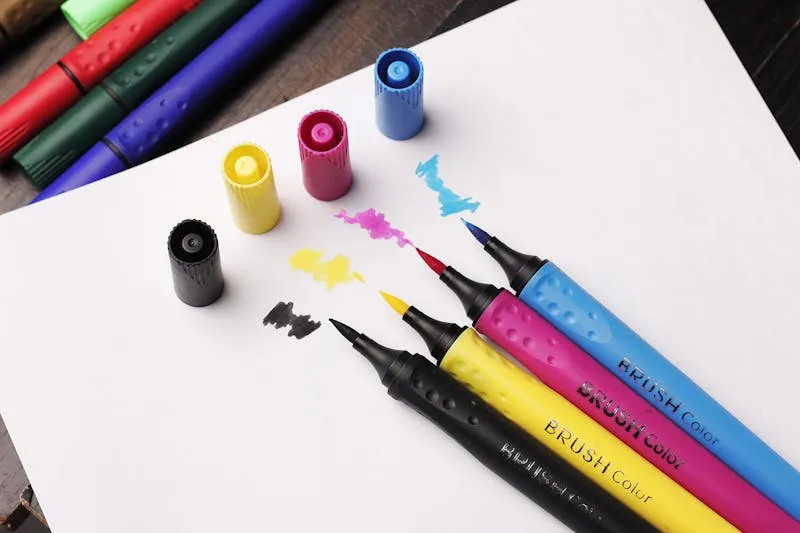
Tombow Dual Brush Pen (10-Pack)
TombowThe industry-standard brush pen for hand lettering and creative journaling. Flexible nylon brush tip on one end, fine bullet tip on the other, with 108 colors available.
Best for: Hand lettering, creative journaling, illustration, bullet journaling
- Flexible nylon brush tip for thick-thin strokes
- Fine bullet tip (0.8mm) on the opposite end
- 108 colors including a colorless blender
- Water-based, odorless ink enables blending
- Self-inking — no dipping required
The Tombow Dual Brush Pen is to hand lettering what the Pilot G2 is to gel pens — the default recommendation, the industry standard, the product that everyone starts with. Walk into any lettering workshop, open any beginner tutorial, browse any stationery flat lay on Instagram, and you’ll see Tombow Dual Brush Pens.
But does the default choice deserve its status? We’ve used Tombow Dual Brush Pens for lettering, journaling, illustration, and general coloring for over two years. Here’s our honest assessment.
Quick Verdict: The Tombow Dual Brush Pen earns its reputation. The flexible brush tip produces beautiful thick-and-thin strokes, the 108 color range is exceptional, and the dual-tip design adds genuine versatility. It’s the best starting point for hand lettering and an excellent tool for creative journaling. Rating: 4.5 / 5.0
Product Overview
The Tombow Dual Brush Pen is a dual-tipped marker with a flexible nylon brush tip on one end and a fine bullet tip (0.8mm) on the other. The water-based, odorless ink is available in 108 colors including a colorless blender. Each pen is approximately 24cm long with a ventilated cap.
Approx. ~$3.50 per pen / ~$22 (10-pack) / ~$85 (complete 108-color set) Brand: Tombow Origin: Japan Ink: Water-based, dye-based, odorless Tips: Flexible brush tip + fine bullet tip (0.8mm) Colors: 108 + colorless blender
Check 10-Pack Pastel Set on Amazon | Check 10-Pack on Amazon
The Brush Tip
The brush tip is the star feature. Made from flexible nylon fibers, it responds to pressure like a real paint brush — press lightly for thin upstrokes, press harder for thick downstrokes. This thick-thin variation is the foundation of brush lettering, and the Tombow’s tip executes it beautifully.
The tip holds its shape well over time. After months of regular use, our brush tips still produce clean thin lines and full thick strokes. They’re not indestructible — aggressive pressing on rough paper will fray any brush tip eventually — but with reasonable care, longevity is good.
The ink flow is consistent. Each stroke deposits even color without blotching or dry patches. The water-based formula means you can blend colors by overlapping while the ink is wet, or by using the colorless blender pen. This blending capability is one of the Tombow’s key advantages over alcohol-based markers for certain techniques.
The Fine Tip
The opposite end features a fine bullet tip (approximately 0.8mm) that’s useful for outlines, details, and smaller writing. It’s not as fine as a dedicated fineliner (like a Sakura Pigma Micron at 0.25mm), but it’s versatile enough for adding borders, writing small text, and creating detailed elements within larger illustrations.
Having both tips in one pen is genuinely convenient. Switching between brush strokes and fine details without reaching for a different pen saves time and maintains creative flow.
Color Range
108 colors is a massive palette. The range includes:
- Primary and secondary colors in multiple shades (light, medium, dark)
- Earth tones — browns, tans, ochres
- Pastels — soft versions of primary colors
- Grays — a full spectrum from cool gray to warm gray
- Skin tones — a reasonable range for portrait illustration
- The colorless blender — essential for blending techniques
Tombow sells pens individually and in curated sets (10-packs themed around tropical, landscape, portrait, galaxy, etc.). The 10-pack sets are the best value for beginners, and the themed groupings are well-chosen.
Performance
Hand Lettering
This is the Tombow’s primary use case, and it excels. The brush tip’s flexibility and responsiveness make it easy to achieve beautiful thick-thin contrast once you learn basic pressure control. Beginners will need practice — consistent thin upstrokes require a light, controlled touch — but the pen rewards effort with gorgeous results.
On smooth paper (Rhodia, HP Premium LaserJet, Canson marker paper), the brush tip glides effortlessly. On rougher paper, it can catch slightly on fibers, which is normal for any brush pen.
Journaling and Planning
Tombow Dual Brush Pens are excellent for adding headers, decorative elements, and color accents to journal pages. The brush tip creates impactful headers in seconds, and the fine tip handles borders and small labels. For bullet journal enthusiasts, Tombows are a staple tool for monthly cover pages and artistic spreads.
Illustration and Coloring
The water-based ink layers and blends well, making Tombows suitable for illustration work. They’re not a replacement for professional-grade alcohol markers (like Copic), but for journaling illustration, greeting cards, and casual art, they perform more than adequately.
Paper Compatibility
Water-based ink means paper choice matters:
- Smooth, thick paper (100gsm+) — Best results. Clean lines, good blending.
- Rhodia, HP Premium LaserJet — Excellent for lettering practice.
- Standard copy paper (75gsm) — Acceptable. Some bleed-through with heavy application.
- Thin paper (Tomoe River, Kokuyo Campus) — Usable for light accents, but heavy brush strokes will bleed.
For best results, use paper specifically marketed for markers or lettering.
Check 10-Pack Pastel Set on Amazon | Check 10-Pack on Amazon
Pros & Cons
What We Love:
- Flexible brush tip produces beautiful thick-thin strokes
- 108 colors — one of the widest ranges available
- Dual-tip design (brush + fine) in one pen
- Water-based ink enables blending
- Self-inking — no dipping required
- Odorless — comfortable for extended indoor use
- Excellent for beginners learning brush lettering
Room for Improvement:
- Water-based ink bleeds through thin paper
- $3.50 per pen adds up when building a collection
- Brush tip will fray with rough paper or excessive pressure
- Not waterproof — finished work will smear if water contacts it
- Not as vibrant as alcohol-based markers on some surfaces
Who Should Buy the Tombow Dual Brush Pen?
- Hand lettering beginners — This is the starting point. The brush tip teaches pressure control better than any alternative.
- Journalers and bullet journal enthusiasts — Instant, beautiful headers and decorative elements.
- Casual illustrators — Good for journaling illustration and greeting cards.
- Teachers and parents — Odorless, non-toxic, and incredibly satisfying for kids and adults.
- Skip if: You need waterproof ink, you work exclusively on thin paper, or you need professional illustration markers (consider Copic instead).
Where to Buy
The 10-pack sets are the best starting point:
- Bright set — Primary and secondary colors for versatile use
- Pastel set — Soft colors perfect for journaling
- Galaxy set — Deep blues, purples, and cosmic tones
Individual pens are available at JetPens (best for single-color selection), Amazon, and craft stores like Michael’s and Joann.
Check 10-Pack Pastel Set on Amazon | Check 10-Pack on Amazon | Check Individual Pen on Amazon
Frequently Asked Questions
Are Tombow Dual Brush Pens good for beginners?
Yes — they’re the most recommended brush pen for beginners for good reason. The flexible tip is responsive but not too soft, making it easier to control than some alternatives. The forgiving nib lets you learn pressure control gradually.
How long do Tombow Dual Brush Pens last?
With regular lettering practice (15-30 minutes daily), a single pen lasts approximately 2-3 months before the ink runs low. The brush tip may last longer than the ink supply.
Can I refill Tombow Dual Brush Pens?
No, they’re not refillable. When the ink runs out, you replace the pen. At $3.50 per pen, replacement cost is a consideration for heavy users.
Tombow vs Zebra Mildliner — which should I get?
Different tools for different purposes. Mildliners are highlighters — pastel colors for highlighting text and adding subtle color. Tombows are brush pens — vibrant colors for lettering, illustration, and bold decoration. Most journalers use both.
What paper should I use for brush lettering practice?
Smooth, thick paper is essential. Rhodia pads, HP Premium LaserJet 32lb paper, and Canson marker paper are all excellent, affordable options. Avoid rough or thin paper, which frays the brush tip and causes bleeding.
Final Verdict
The Tombow Dual Brush Pen has earned its position as the hand lettering standard. The brush tip is responsive and durable, the color range is exceptional, and the dual-tip design adds practical versatility. It’s not perfect — water-based ink limits paper compatibility, and the pens aren’t refillable — but for the vast majority of letterers, journalers, and creative enthusiasts, it’s the right tool.
Start with a 10-pack, practice your pressure control, and discover why millions of people have made the Tombow Dual Brush Pen part of their creative toolkit.
Rating: 4.5 / 5.0
Check 10-Pack Pastel Set on Amazon | Check 10-Pack on Amazon
For more brush pen options, see our Best Brush Pens roundup. Also check out our Zebra Mildliner Review and Complete Beginner’s Guide to Japanese Stationery.