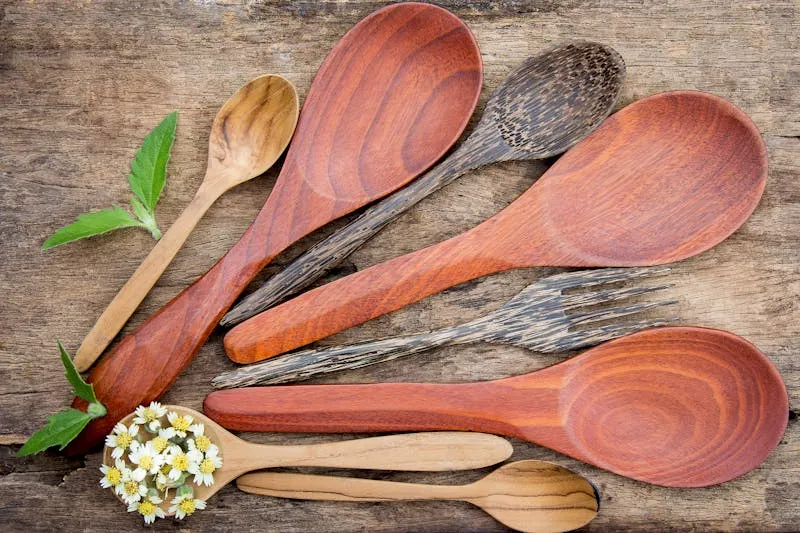
Japanese cuisine’s reputation for precision and beauty starts with the tools. Walk into a professional Japanese kitchen and you’ll find tools that look nothing like their Western equivalents — a ceramic grater with tiny, sharp teeth instead of metal holes, a rectangular mandoline that shaves vegetables paper-thin, wooden rice paddles shaped for a specific fluffing motion, and clay pots that distribute heat like nothing else in the cooking world.
These aren’t exotic novelties. They’re tools refined over centuries for specific culinary tasks, and they perform those tasks better than any Western alternative. Living in Japan, we’ve gradually replaced most of our Western kitchen tools with Japanese equivalents — not out of cultural preference, but because they simply work better. A Japanese mandoline produces cuts that a Western slicer can’t match. A donabe (clay pot) cooks rice and hot pot with a depth of flavor that metal pots can’t replicate. An oroshigane (grater) produces a grated texture that metal box graters can’t achieve.
This guide covers the essential Japanese kitchen tools that we believe every home cook should know about — tools that will improve your cooking regardless of what cuisine you prepare.
Our Top Picks:
- Best Mandoline: Benriner Japanese Mandoline Slicer
- Best Grater: Oroshigane Ceramic Grater
- Best Chopsticks: Moribashi Cooking Chopsticks
- Best Rice Paddle: Hinoki Cypress Shamoji
- Best Clay Pot: Donabe (Iga-Yaki Earthenware Pot)
- Best Cutting Board: Hinoki Cypress Cutting Board
- Best Skimmer: Aaku (Mesh Skimmer)
- Best Mortar: Suribachi (Ceramic Mortar and Pestle)
- Best Grilling: Yakiami (Wire Mesh Grill)
- Best Peeler: Shimomura Rotary Peeler
1. Benriner Japanese Mandoline Slicer — Best Mandoline
Approx. ~$28 | Rating: 4.7/5 | Best For: Paper-thin slicing, julienne, and uniform vegetable prep
The Benriner mandoline is the tool that professional chefs worldwide use for precision vegetable slicing. Forget those bulky, complicated V-shaped mandolines with a dozen attachments — the Benriner is a simple, rectangular slicer with a frighteningly sharp Japanese stainless steel blade that produces cuts so thin you can read through them.
The blade is adjustable via a thumbscrew on the underside, controlling slice thickness from paper-thin (less than 1mm) to about 5mm. The adjustment is stepless, so you can dial in exactly the thickness you want. The Japanese steel blade stays sharp through hundreds of vegetable-prep sessions — it’s the same quality steel used in Japanese kitchen knives.
Interchangeable julienne blades (included) produce fine, medium, and coarse julienne cuts for garnishes, salads, and stir-fry prep. The fine julienne blade produces matchstick cuts that would take extraordinary knife skill and patience to achieve by hand.
A word of genuine caution: the Benriner is extremely sharp. Always use the included hand guard, and focus while slicing. This is a tool that demands respect. Professional chefs who’ve been using mandolines for decades still cut themselves occasionally. Use the hand guard every single time.
Key Features
- Japanese stainless steel blade, razor sharp
- Adjustable thickness from sub-1mm to 5mm
- Includes 3 interchangeable julienne blades
- Simple, efficient rectangular design
- Hand guard included (always use it)
- BPA-free plastic body
- Compact and easy to store
Why Every Kitchen Needs One
A mandoline transforms vegetable prep from a slow, inconsistent process into a fast, perfectly uniform one. Cucumber salads, daikon garnishes, potato gratins, coleslaw, fennel salads — anything that requires thin, even slices benefits enormously from a Benriner. The consistency of the cuts means everything cooks evenly, which produces better results in every recipe.
2. Oroshigane Ceramic Grater — Best Grater
Approx. ~$15 | Rating: 4.5/5 | Best For: Grating ginger, daikon, garlic, and wasabi
The oroshigane (おろし金) is a Japanese grater that produces a fundamentally different result than a Western box grater or microplane. Instead of cutting food into small strips (like a box grater) or into a fine powder (like a microplane), an oroshigane breaks food into a wet, pulpy paste by crushing the cellular structure. For ginger, garlic, and daikon, this paste texture releases maximum flavor and aroma while maintaining a moist, integrated consistency.
Traditional oroshigane are copper or tin plates with tiny, sharp teeth hand-punched in rows. Modern ceramic versions are more affordable, easier to clean, and produce excellent results. The ceramic surface has hundreds of small, raised teeth arranged in a circular pattern. You grate in a circular motion, and the food breaks down into a smooth, aromatic paste.
Grating fresh ginger on a ceramic oroshigane produces a result that’s completely different from minced ginger or microplaned ginger. The paste has a more intense, fresher flavor because the crushing action releases essential oils that cutting doesn’t access. Once you’ve tasted the difference, you’ll never go back to a box grater for ginger.
Key Features
- Ceramic construction with fine grating teeth
- Produces aromatic paste (not strips or powder)
- Ideal for ginger, garlic, daikon, wasabi, and citrus zest
- Easy to clean with a brush under running water
- Non-reactive surface doesn’t impart metallic taste
- Integrated collection well
- Compact design for kitchen drawer storage
3. Moribashi Cooking Chopsticks — Best Chopsticks
Approx. ~$12 | Rating: 4.6/5 | Best For: Cooking tasks that demand precision and gentleness
Moribashi (盛り箸) are long cooking chopsticks — typically 30-33 cm (12-13 inches) — designed for cooking tasks. They’re longer than eating chopsticks to keep your hands away from heat, and their pointed tips provide precise control for turning, flipping, arranging, and testing food.
Once you learn to cook with chopsticks, you’ll use them constantly. They’re superior to tongs for delicate tasks: turning a piece of fish without breaking it, separating noodles in a pot, testing a piece of vegetable for doneness, rearranging ingredients in a pan, and plating food with precision. They’re gentler than metal utensils, won’t scratch nonstick coatings, and provide a level of fine motor control that no Western tool matches.
Bamboo moribashi are the traditional choice — lightweight, heat-resistant, and comfortable. Stainless steel moribashi with silicone tips are a modern alternative that’s more durable and dishwasher-safe.
Key Features
- Extra-long (30-33 cm) for safe cooking distance
- Precise pointed tips for delicate control
- Won’t scratch nonstick surfaces
- Lightweight bamboo or durable stainless steel
- Versatile for frying, boiling, sauteing, and plating
- Essential tool in any Japanese kitchen
4. Hinoki Cypress Shamoji (Rice Paddle) — Best Rice Paddle
Approx. ~$10 | Rating: 4.4/5 | Best For: Fluffing and serving rice without crushing or sticking
The shamoji (杓文字) is the flat, paddle-shaped utensil used to fluff, fold, and serve cooked rice. It seems simple, but the design is precisely optimized for its task. The flat blade slides between rice grains without crushing them, the rounded edges follow the contour of the rice cooker pot, and the surface texture prevents rice from sticking.
Hinoki (Japanese cypress) shamoji are the traditional choice. Hinoki is naturally antibacterial, subtly aromatic, and develops a beautiful patina with use. The wood’s natural oils prevent rice from sticking without any coating. Dip the shamoji in water before use and rice slides off cleanly.
Modern plastic shamoji with embossed dimple surfaces are popular in Japan — the raised bumps create air pockets that prevent rice adhesion. These are functional and dishwasher-safe, but they lack the beauty and natural qualities of hinoki.
Key Features
- Flat blade for gentle rice fluffing
- Hinoki cypress: naturally antibacterial and aromatic
- Non-stick surface without chemicals
- Rounded edges contour to pot shapes
- Develops beautiful patina with age
- Traditional Japanese kitchen essential
5. Donabe (Iga-Yaki Earthenware Pot) — Best Clay Pot
Approx. ~$55–120 | Rating: 4.8/5 | Best For: Hot pot (nabe), rice cooking, and slow simmering
The donabe (土鍋, “clay pot”) is the heart of Japanese communal cooking. Made from porous earthenware — the most prized from Iga, Mie Prefecture — a donabe retains and distributes heat in a way that metal pots simply cannot replicate. The thick clay walls absorb heat slowly, distribute it evenly, and retain it long after removing from the heat source. This gentle, enveloping heat produces flavors in soups, stews, and rice that are distinctly superior to metal pot cooking.
Donabe are the traditional vessel for nabe (hot pot) — the beloved Japanese communal meal where a pot of simmering broth is placed at the center of the table and diners add ingredients throughout the meal. The donabe keeps the broth at a gentle simmer without aggressive boiling, which produces clearer broth and more tender ingredients.
Perhaps more surprising to Western cooks, donabe also produce exceptional rice. The clay pot’s heat retention creates a natural steaming environment that cooks rice evenly and produces a thin, golden okoge (crust) on the bottom — a sought-after delicacy. Donabe rice has a distinct flavor and texture that rice cooker rice, as good as it is, doesn’t quite achieve.
Donabe require proper seasoning before first use (cooking rice porridge in the pot to seal the porous clay) and careful handling (no thermal shock — don’t place a hot donabe on a cold, wet surface). With care, a quality donabe lasts generations.
Key Features
- Porous earthenware with superior heat retention
- Even, gentle heat distribution
- Ideal for hot pot, rice, soups, and stews
- Produces natural golden crust (okoge) on rice
- Retains heat at table for extended serving
- Available in various sizes for individual to family use
- Requires seasoning before first use
6. Hinoki Cypress Cutting Board — Best Cutting Board
Approx. ~$45 | Rating: 4.6/5 | Best For: Gentle on knife edges, naturally antibacterial, beautiful workmanship
Japanese hinoki cypress cutting boards are prized by chefs for three reasons: they’re gentle on knife edges (the soft wood absorbs blade impact rather than dulling it), they’re naturally antibacterial (hinoki oil is a proven antimicrobial agent), and they smell wonderful (the fresh, clean aroma of cypress released with every cut).
Hinoki boards are softer than Western hardwood boards, which means they’ll show knife marks more readily. In Japanese kitchen philosophy, this is acceptable — the board is a working tool, not a showpiece. The trade-off for visible knife marks is a board that keeps your Japanese knives sharper longer.
Key Features
- Natural hinoki cypress construction
- Gentle on knife edges — protects sharpness
- Naturally antibacterial hinoki oil
- Light, clean aroma with each use
- Lightweight for its size
- Hand wash and stand upright to dry
7. Aaku (Wire Mesh Skimmer) — Best Skimmer
Approx. ~$10 | Rating: 4.5/5 | Best For: Skimming broth, lifting tempura, draining noodles
The aaku (or ami-jakushi) is a fine mesh skimmer used for skimming scum from stocks and soups, lifting fried foods from oil, and draining noodles and blanched vegetables. The fine stainless steel mesh catches small particles that slotted spoons miss, producing clearer broths and cleaner fried foods.
For tempura, the mesh skimmer is essential. Between batches, you sweep the skimmer across the frying oil to remove the tiny bits of batter (tenkasu) that would otherwise burn and muddy the oil. This keeps the oil clean and the tempura crisp throughout the cooking session.
Key Features
- Ultra-fine stainless steel mesh
- Catches small particles that spoons miss
- Essential for clear broths and clean frying oil
- Long bamboo handle for safe distance from heat
- Lightweight and easy to maneuver
- Durable stainless mesh construction
8. Suribachi (Ceramic Mortar and Pestle) — Best Mortar
Approx. ~$20 | Rating: 4.4/5 | Best For: Grinding sesame seeds, making pastes, and dressings
The suribachi (擂り鉢) is a ceramic mortar with fine grooves (kushime) scored into the interior surface. These grooves grip ingredients during grinding, allowing you to crush sesame seeds, peppercorns, dried spices, and herbs more efficiently than a smooth-surfaced mortar. The wooden pestle (surikogi) has a comfortable, natural grip.
Grinding roasted sesame seeds in a suribachi is fundamental to Japanese cooking — the freshly ground sesame releases oils and aromas that pre-ground sesame simply doesn’t have. The grooved surface breaks the seeds evenly without letting them slide around. The resulting paste (goma-dare) is the base for countless Japanese sauces and dressings.
Key Features
- Ceramic bowl with grooved interior (kushime)
- Wooden pestle (surikogi)
- Efficient grinding with less effort
- Grooves grip and break down ingredients
- Ideal for sesame, spices, herbs, and pastes
- Available in various sizes
9. Yakiami (Wire Mesh Grill) — Best for Stovetop Grilling
Approx. ~$15 | Rating: 4.3/5 | Best For: Toasting mochi, grilling fish, and roasting vegetables over a gas flame
A yakiami is a simple wire mesh grill that sits over a gas burner, converting your stovetop into a direct-heat grill. It’s used in Japanese kitchens for toasting mochi (rice cakes), grilling fish, roasting peppers, and charring vegetables. The direct flame produces a char and smokiness that oven broiling can’t replicate.
The mesh allows flame and heat to reach the food directly while supporting it securely. For toasting mochi — which puffs up dramatically when heated — the yakiami is indispensable. The mesh cradles the soft, expanding mochi while allowing it to develop a crispy, golden-brown exterior.
Note: Yakiami work only on gas stoves. They are not compatible with electric or induction cooktops.
Key Features
- Stainless steel wire mesh construction
- Sits directly over gas burner
- Direct-flame grilling and toasting
- Essential for mochi, fish, and vegetables
- Compact and easy to store
- Gas stovetop only (not for induction or electric)
10. Shimomura Rotary Peeler — Best Peeler
Approx. ~$8 | Rating: 4.5/5 | Best For: Fast, effortless peeling of vegetables and fruits
Japanese Y-peelers (also called rotary peelers) are a revelation if you’ve only used Western swivel peelers. The wide, angled blade follows the contour of vegetables naturally, removing thin, even peels with almost no effort. Shimomura, a Seki-based blade manufacturer, produces one of the best — a razor-sharp stainless steel blade that peels daikon, carrots, potatoes, and apples faster than any swivel peeler we’ve used.
The ergonomic Y-shaped handle provides a natural grip angle, and the wide blade spans large vegetables like daikon radish that would require multiple passes with a narrow swivel peeler. The blade is incredibly sharp out of the box and maintains its edge through years of daily use.
Key Features
- Y-shaped design for natural peeling motion
- Razor-sharp Japanese stainless steel blade
- Wide blade for large vegetables
- Lightweight and comfortable
- Excellent edge retention
- Includes a potato eye remover tip
Building Your Japanese Kitchen Tool Collection
Start Here (Under $50)
- Shimomura peeler ($8) — immediate daily improvement
- Cooking chopsticks ($12) — learn to cook with chopsticks
- Ceramic grater ($15) — transform your ginger and garlic game
- Shamoji rice paddle ($10) — proper rice handling
Next Level (Add $60-100)
- Benriner mandoline ($28) — precision vegetable prep
- Suribachi mortar ($20) — fresh ground sesame and spices
- Wire mesh skimmer ($10) — cleaner broths and frying
- Hinoki cutting board ($45) — protect your knives
Complete Collection (Add $70-135)
- Donabe clay pot ($55-120) — the heart of communal cooking
- Yakiami grill ($15) — stovetop grilling magic
Frequently Asked Questions
Do I need all of these tools to cook Japanese food?
No. Start with a good knife (see our best Japanese kitchen knives guide for recommendations), a rice cooker, and cooking chopsticks — these three tools handle the vast majority of Japanese home cooking. Add other tools as you explore different techniques and dishes. Each tool in this guide excels at specific tasks, but you don’t need all of them to get started.
Can I use Japanese kitchen tools for non-Japanese cooking?
Absolutely. Every tool in this guide enhances cooking regardless of cuisine. The Benriner mandoline is used in French, Italian, and Thai kitchens worldwide. The ceramic grater works for any recipe calling for grated ginger or garlic. The donabe excels at any soup, stew, or braised dish. Japanese kitchen tools are designed for specific tasks — those tasks exist in every cuisine.
How do I care for wooden kitchen tools?
Hand wash wooden tools (shamoji, cutting boards, surikogi) with warm water and a mild soap immediately after use. Stand upright or hang to dry completely — never leave wooden tools soaking in water. Occasionally rub with food-safe mineral oil to prevent drying and cracking. Never put wooden tools in the dishwasher.
Is a donabe worth buying if I already have a Dutch oven?
They serve similar but not identical purposes. A Dutch oven retains heat and provides even cooking, similar to a donabe. But a donabe’s porous clay creates a different heat character — more gradual, more gentle, with better moisture retention. For hot pot specifically, a donabe is superior because it simmers more gently and retains heat at the table. If you love soups, stews, and communal dining, a donabe is a worthwhile addition to a kitchen that already has a Dutch oven.
Where can I buy authentic Japanese kitchen tools?
Amazon carries most items in this guide from reputable Japanese brands. For specialty items (like handmade donabe or artisan cutting boards), try MTC Kitchen, Korin (New York-based Japanese kitchen tool specialists), and Japanese kitchen tool shops on Etsy. If you visit Japan, the kitchen districts of Kappabashi in Tokyo and Sennichimae Doguyasuji in Osaka are paradise for kitchen tool shopping.
Final Verdict
Japanese kitchen tools reflect the same philosophy that drives Japanese knives, stationery, and craft supplies: each tool is designed for a specific purpose, made from the best materials, and refined over generations of use. They’re not complicated or showy — they’re simple tools that do one thing extraordinarily well.
Our top recommendation for a first Japanese kitchen tool purchase is the Benriner mandoline for its immediate, dramatic impact on vegetable prep quality. The ceramic grater is a close second for the transformative effect it has on ginger and garlic. And the donabe is the tool that will most profoundly change how you think about cooking — once you’ve tasted donabe rice or a slowly simmered hot pot, you’ll understand why clay has been the preferred cooking material in Japan for centuries.
Start with what excites you, learn to use it well, and let your collection grow naturally. For proper table setting, our best Japanese chopsticks guide covers the best options for everyday dining. If you cook rice regularly, a quality Japanese rice cooker is an equally transformative investment. The Japanese approach to kitchen tools — fewer tools, better tools, used with skill and care — is a philosophy that serves every cook well.
Check Benriner Mandoline on Amazon | Check Donabe Clay Pot on Amazon | Check Ceramic Grater on Amazon